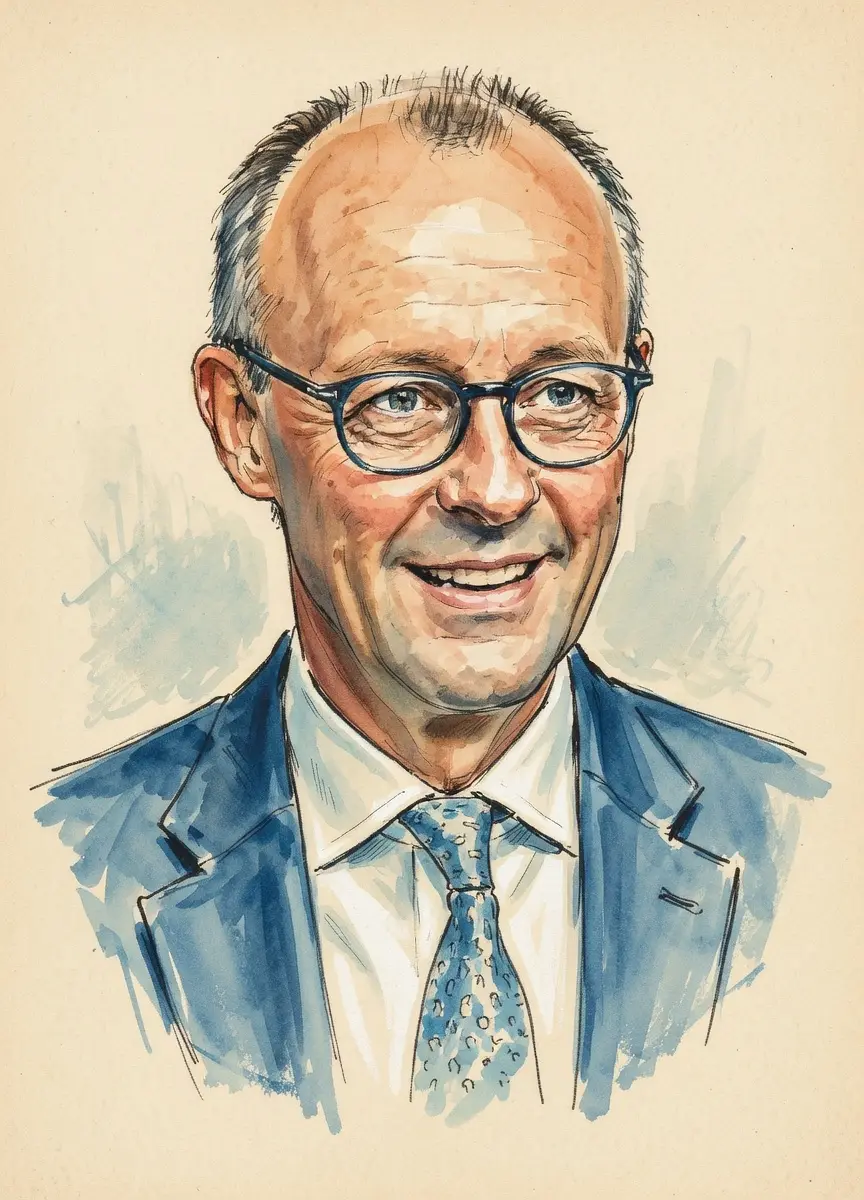
Friedrich Merz on Climate Change
TL;DR
Friedrich Merz views technological innovation and market mechanisms as the primary drivers for climate solutions, advocating for EU policy review.
Key Points
He stated that Germany's most important contribution to solving climate change lies in innovation and technology.
Merz publicly asked the EU to be open to revising the end date for the combustion engine car ban past 2035.
He advocated that the world is at a crossroads and must stop climate change through a global commitment to action.
Summary
Friedrich Merz's core position on Climate Change emphasizes that technological innovation and market-based solutions, rather than purely regulatory measures, are key to achieving climate goals. He stresses that Germany's primary contribution to solving the global issue should come through developing and exporting advanced green technologies, positioning this as both an environmental necessity and an economic opportunity. He has called for a review of certain European Union climate policies, specifically suggesting flexibility on the end date for the phase-out of combustion engine cars, indicating a pragmatic concern for industrial competitiveness and consumer choice.
This stance suggests an evolution in emphasis, prioritizing economic realism alongside environmental commitment, which has reportedly sparked internal party debate regarding the stringency of current targets. He advocates for an open approach to revising established EU legislation, such as the Emissions Trading System, to ensure it remains effective and globally competitive. The implication is that while he accepts the need for climate action, the methods employed must be economically sustainable and leverage German industrial strengths.
Frequently Asked Questions
Friedrich Merz takes a pragmatic stance on climate change, strongly asserting that technological innovation and market-based mechanisms are the most effective tools for achieving climate goals. He views this approach as essential for both environmental success and maintaining German industrial competitiveness.
He has signaled a willingness to revisit certain strict EU climate regulations, such as the 2035 ban on new combustion engine cars, suggesting a need for revision. This has led to him being described as pushing back against the EU's current trajectory on climate policy.
Friedrich Merz believes Germany's primary contribution to the global fight against climate change should be through leading in the development and export of green technologies. He stresses that this focus leverages German strengths while addressing the planetary challenge.
Sources8
Innovation and technology are key to German contribution in solving climate change: Chancellor Merz
Merz says EU should be open to revising carbon market
Merz: Ask EU to drop hard cut-off for combustion cars by 2035
World at a crossroads to stop climate change, Germany's Merz says
Germany: The politics of climate change
Merz can leverage Germany’s green transition for growth and security
Speech by Chancellor of the Federal Republic of Germany, Olaf Scholz, at the World Climate Leaders Summit
Ursula von der Leyen pushes back as leaders and industry plot to weaken EU’s core climate law
* This is not an exhaustive list of sources.