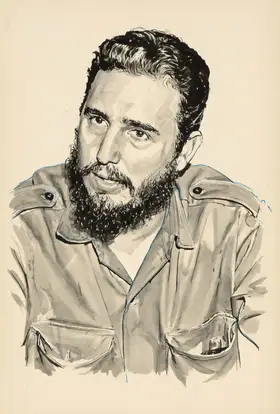
Fidel Castro on American
TL;DR
Fidel Castro consistently viewed the American government as an aggressive, imperialist power threatening Cuban sovereignty and Latin American liberation.
Key Points
Fidel Castro visited the United States in April 1959 seeking diplomatic recognition and investment following the Cuban Revolution.
His administration nationalized industries and businesses, many of which were owned by American entities, leading to increased friction.
He expressed disdain for the hypocrisy of American democracy, exemplified by his reported discomfort during a visit to Mount Vernon.
Summary
Fidel Castro's position on American policy and the nation itself was fundamentally adversarial, rooted in Cuban nationalism and Marxist-Leninist ideology. Following the 1959 revolution, his administration viewed the United States as the primary obstacle to Cuban self-determination, leading to nationalizations of American-owned assets and subsequent diplomatic and economic conflict. He often framed the relationship as a struggle against imperialist domination, citing historical interventions as evidence of continuous interference in the hemisphere's affairs.
This antagonistic stance was punctuated by moments of strategic engagement, such as his April 1959 visit to the United States, which initially aimed to secure recognition and perhaps investment. However, the fundamental conflict over Cuba's revolutionary path, particularly its alignment with the Soviet Union and socialist reforms, quickly hardened his opposition. Even later in his tenure, he maintained criticism of American foreign policy actions globally, viewing them through the lens of superpower conflict and exploitation of developing nations.
Key Quotes
If they are going to teach us that, it would be better that they teach us nothing.”
“200,000 dead gringos”
Frequently Asked Questions
When Fidel Castro visited the United States in April 1959, the initial reception was marked by enthusiasm from some sectors, and his stated goal was to secure diplomatic recognition and potentially investment. However, his interactions, including a visit to Mount Vernon, hinted at underlying ideological differences that would soon sour relations, according to historical accounts.
Fidel Castro's core position remained consistently negative, viewing the American government as an imperialist threat to Cuba and Latin America throughout his rule. While diplomatic relations shifted, his fundamental ideological opposition to what he perceived as American interference did not evolve significantly from the revolutionary period onward.
Fidel Castro frequently criticized the American government for what he termed its imperialistic foreign policy and perceived hypocrisy in its democracy claims. He often spoke against American interventionism in the affairs of smaller nations, framing the relationship as an ongoing struggle for sovereignty, as documented in various statements from his long tenure.