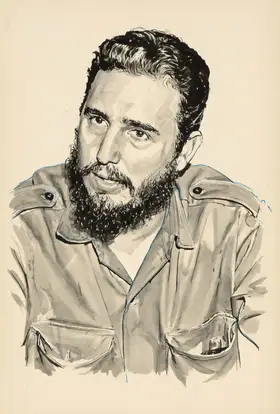
Fidel Castro on Afro-American Liberation
TL;DR
Fidel Castro supported Afro-American liberation as part of a broader anti-imperialist global struggle against the United States.
Key Points
Fidel Castro welcomed Robert F. Williams, an exiled Black radical leader, to Cuba after he fled U.S. authorities in 1961.
Castro's Cuba served as a base for Williams to publish his newspaper, The Crusader, broadcasting anti-U.S. rhetoric into the United States.
The Cuban Revolution's successful armed struggle against a U.S.-backed regime was seen as an appealing model by many Black Power activists.
Summary
Fidel Castro's position on Afro-American Liberation was framed within his staunchly anti-American imperialist stance, viewing the struggle as inherently linked to global anti-colonial movements. His support was demonstrated by offering political asylum and a platform to key U.S. Black radical figures, such as Robert F. Williams, who advocated for armed self-defense and revolution. Castro’s Cuba became a beacon for Black radicals who felt the U.S. system had failed them by continuing racial oppression domestically while fighting imperialism abroad. This alignment was solidified by a shared enemy in U.S. imperialism, which attracted significant ideological overlap between Cuban revolutionary thought and the more militant wings of the Black Power movement.
This Cuban sanctuary allowed exiled leaders to disseminate anti-U.S. rhetoric internationally, directly challenging the American narrative of democracy and freedom. While Castro's regime was ultimately dependent on Soviet aid, which sometimes imposed limitations on exporting revolution, the initial reception and platform provided to American activists were a powerful symbolic and material endorsement of their cause. This Cuban connection offered a material alternative to the Soviet model, which Black radicals often viewed as too focused on class over race, and contrasted with the Chinese model due to geographical proximity and Castro's direct, confrontational relationship with the U.S.
Frequently Asked Questions
Yes, Fidel Castro met with Malcolm X in Harlem, New York, in 1960, shortly before attending the UN General Assembly. They discussed the Negro's relationship to Cuba and the broader Third World struggle against colonialism. This meeting exemplified the emerging solidarity between Cuban revolutionaries and African American activists seeking liberation.
Castro's overtly hostile relationship with the U.S. government naturally aligned him with any movement challenging American imperialism, including Afro-American Liberation. His government offered asylum to Black radicals like Robert F. Williams, giving them a platform to criticize U.S. racism internationally. This anti-imperialist stance made Cuba a symbolic ally to militants seeking to overthrow domestic oppression.
The Cuban Revolution's success in waging a triumphant armed struggle against a U.S.-backed regime was highly inspirational for Black militants. It demonstrated that an oppressed force could successfully challenge a powerful entity supported by the United States, reinforcing the idea that armed struggle was a viable path for self-determination.
Sources10
black insurgency: the long struggle for land and national
WE CAN WIN 1
* This is not an exhaustive list of sources.