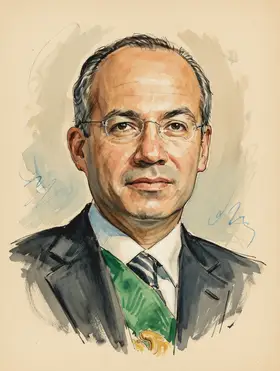
Felipe Calderón on Presidential Legacy
TL;DR
Felipe Calderón recognized his legacy would be defined by the drug war, despite hoping for credit on education and environment.
Key Points
He stated in 2011 that he would likely be remembered for the fight against organized crime, rather than his education or environmental work.
The visual representation of his presidency is often seen through the lens of the violent escalation linked to his 'War on Drugs' strategy (2006-2012).
His administration saw a significant increase in intentional homicides, with cumulative figures exceeding 120,000 during his six-year term.
Summary
Felipe Calderón acknowledged that his presidential legacy, covering his 2006 to 2012 term, would inevitably be dominated by the security strategy he initiated. This strategy involved the militarization of the fight against organized crime, which led to an unprecedented escalation of violence, often referred to as the 'War on Drugs.' While he expressed a desire to be remembered for positive actions in education and environmental protection, he stated he would likely be remembered for the security issue, perhaps unfairly. The academic study of Mexican presidential legacies suggests that a president's capacity to solve problems is the greatest determinant of a positive memory among experts, which casts a complex shadow over the highly criticized security measures of his administration.
In contrast to his stated aspirations for areas like education, where he pushed reforms emphasizing quality and access, and environmental policies, such as hosting the 2010 UN Climate Change Conference, the visible and violent repercussions of the security offensive have been the most enduring and represented part of his tenure. This focus on violence and the resulting security climate has been the subject of much visual and academic scrutiny after he left office, indicating a highly contested legacy shaped by conflict and its representation.
Frequently Asked Questions
Felipe Calderón was openly concerned that his legacy would be overwhelmingly defined by the security strategy and the resulting violence from the war on drugs. He expressed a hope to be remembered for other accomplishments like education and environmental efforts, but believed the conflict would overshadow them.
Academic analysis suggests that a president's success in solving problems is the strongest predictor of a positive expert assessment. Calderón's legacy is therefore complex, as the security crises he faced were significant problems, but his response resulted in widespread criticism and violence.
Yes, he also highlighted initiatives in education, pushing for reforms in quality and teacher training, and environmental policy, notably hosting the COP 16 Climate Change Conference in 2010. However, these positive efforts are often overshadowed by the drug war's impact.
Sources4
Of Love and Hate: Understanding the Determinants of Presidential Legacies
Power, Violence and Representation: The Visual Legacy of Felipe Calderón's Presidency
Mexico's Ex-President Felipe Calderón Called a “murderer” in France
Felipe Calderon Keynote Speaker - Harry Walker Agency
* This is not an exhaustive list of sources.