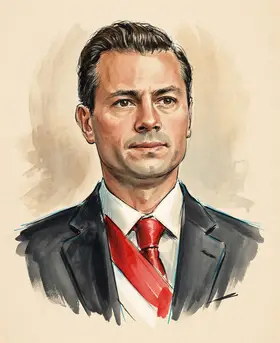
Enrique Peña Nieto on Neoliberalism
TL;DR
Enrique Peña Nieto strongly advanced a neoliberal agenda, most notably through a comprehensive energy sector reform that encouraged private investment.
Key Points
He amended the Constitution to allow foreign and private companies to invest in Pemex through state-operated auctions as part of his Energy Reform.
His administration pursued goals that encouraged investment in green energy and technology, aiming to meet clean energy targets set during the Paris Agreement negotiations.
The neoliberal policies enacted under his leadership were criticized by his successor as contributing to the country's poor economic state and high energy prices.
Summary
Enrique Peña Nieto strongly advocated for and implemented core neoliberal policies during his 2012-2018 presidency, framing these reforms as essential for modernization and economic competitiveness. The key evidence of his pro-neoliberal stance is the Energy Reform, which amended the Constitution to permit foreign and private sector investment in the state-owned oil company, Pemex, through state-operated auctions. This move was intended to overcome stagnation, corruption, and outdated technology within the energy sector, while also supporting stated goals in green energy and technology investment to meet climate change commitments like those in the Paris Agreement.
His administration's embrace of neoliberalism extended beyond energy, as NAFTA, a long-standing agreement promoting free-market trading, was also a feature of the preceding political environment that his administration continued. While AMLO's successor later characterized the neoliberal period as a 'nightmare,' Peña Nieto's policies sought to integrate Mexico more deeply into global markets and stimulate economic growth, viewing state control over resources as a liability that needed modernization through liberalization and private capital infusion.
Frequently Asked Questions
Enrique Peña Nieto was a strong advocate and implementer of neoliberal policies during his presidency from 2012 to 2018. His position was centered on opening key sectors of the economy, such as energy, to private and foreign investment to spur growth. He viewed these market-oriented reforms as necessary to modernize Mexico and overcome prior economic stagnation.
Yes, his administration was characterized by a commitment to neoliberalism, most significantly through the constitutional changes that opened the energy sector. These reforms aimed to increase competitiveness and attract capital through liberalization. Critics, however, argued that these neoliberal tendencies led to negative social and economic consequences.
His most significant neoliberal action was the Energy Reform, which allowed private entities to invest in Pemex, the state oil company, via auctions. This sought to modernize the sector and encourage investment in renewable technology. This move was seen as institutionalizing the shift toward market participation in strategic national resources.
Sources6
The Effect of México's Transition from Neoliberalism to Populism on Environmental Policy
Mexico's Policy Cycles: Similarities and Differences in Policy Cycles of President Enrique Peña Nieto's Neoliberal Model with President Andres Manuel Lopez Obrador's Neostructural Model
AMLO Goes Full Throttle Against Neoliberalism — But What About NAFTA?
'The neoliberal nightmare' is over in Mexico, Amlo declares
MORENA and the Gasolinazo
Neoliberalism,Privatization and Corruption: A Mexican Case Study
* This is not an exhaustive list of sources.