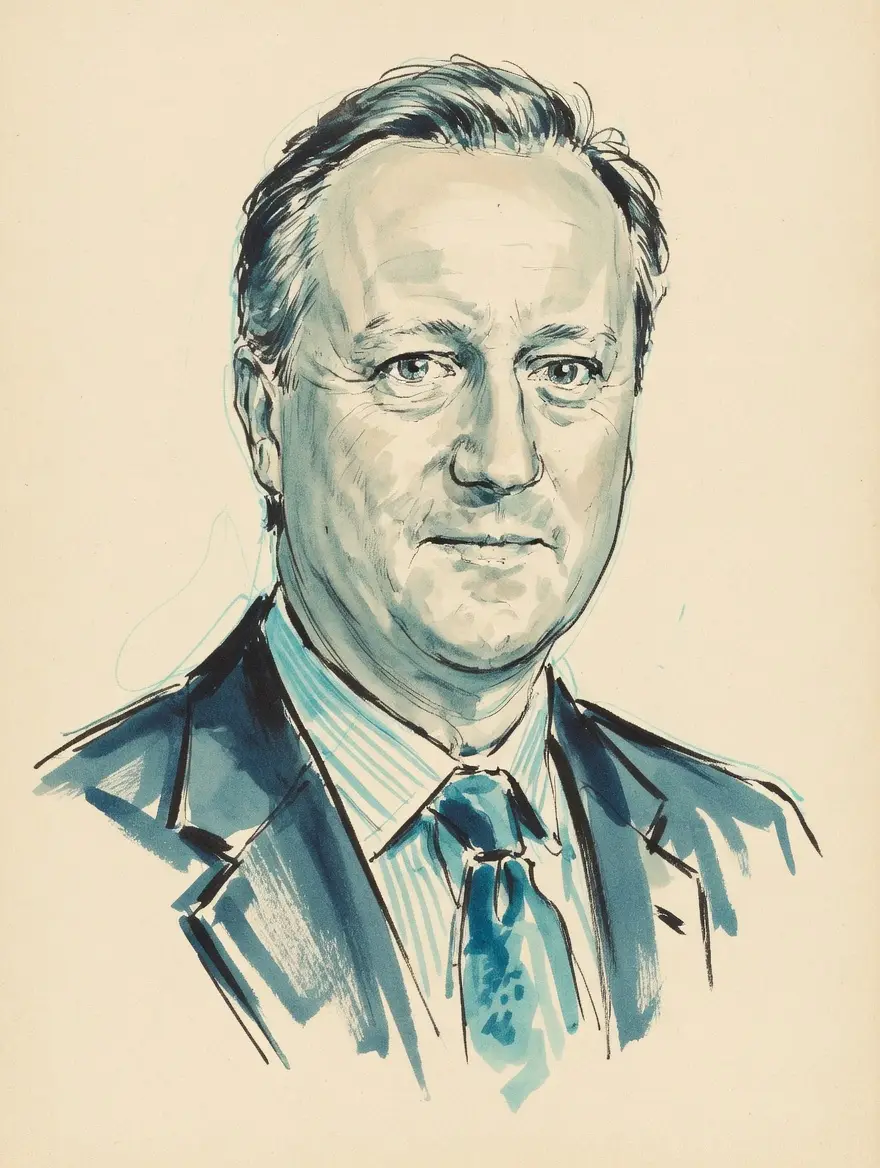
David Cameron on China
TL;DR
David Cameron championed a "golden era" of deep economic ties with China, but now faces scrutiny over post-premiership dealings and an evolved geopolitical reality.
Key Points
During his premiership, he aimed for the UK to be China's leading partner in the West, signaled by President Xi's 2015 state visit.
He unsuccessfully sought hundreds of millions of dollars from the China Investment Corporation for a $1 billion China-UK investment fund after leaving office in 2016.
As Foreign Secretary, he stated that the UK will continue to engage with China where it furthers British interests, acknowledging Beijing's increased assertiveness.
Summary
David Cameron, as Prime Minister, spearheaded the UK's relationship with China during what was termed a "golden era" of engagement, marked by significant bilateral trade and investment, exemplified by Chinese President Xi Jinping's 2015 state visit. During this period, he actively sought closer economic ties, signaling an ambition for the UK to be China's leading Western partner and welcoming Chinese involvement in sensitive sectors like nuclear power. However, this approach has drawn significant criticism, particularly following his return to government as Foreign Secretary in late 2023, with concerns raised over his prior financial ventures linked to Chinese interests, such as a major UK-China investment fund and promotion of Belt and Road Initiative projects.
The context of his China policy has shifted dramatically since his premiership, moving from embrace to a more hawkish stance adopted by subsequent Conservative governments. While Cameron has conceded that China has become "more aggressive and assertive" and stated the UK will engage where it furthers its interests, his past actions and continued associations lead to ongoing scrutiny regarding potential conflicts of interest and the integrity of his diplomatic role. His reappointment highlights a tension between his legacy of engagement and the current political atmosphere, which is far more skeptical of Beijing's influence and intentions.
Key Quotes
UK China working together to oppose trade protectionism at the forthcoming G20 summit in Brisbane, Australia.
He declared that the UK and China “share an interest in a stable and ordered rule” in international affairs.
Frequently Asked Questions
As Prime Minister, David Cameron pursued a policy of deep engagement, culminating in what was termed the "golden era" of UK-China relations. He strongly advocated for deepening economic ties and cooperation across various sectors between the two nations.
His core position appears to have evolved from one of unreserved embrace to a more cautious approach, acknowledging China has become more assertive. However, concerns persist over his personal financial dealings with Chinese-linked entities post-premiership.
A significant development during his peak engagement was the agreement that allowed Chinese involvement in the UK's civil nuclear programme. The state visit in 2015 also inked trade and investment deals estimated at £30bn.
Sources5
Why David Cameron's past and present relations with China could be Rishi Sunak's first political headache of 2024
Cameron as UK foreign secretary: What it means for China relations
Concerns as China welcomes David Cameron's return as foreign secretary
The trouble with David Cameron's China links
British Prime Minister David Cameron Meets with Chinese Vice Premier Ma Kai
* This is not an exhaustive list of sources.