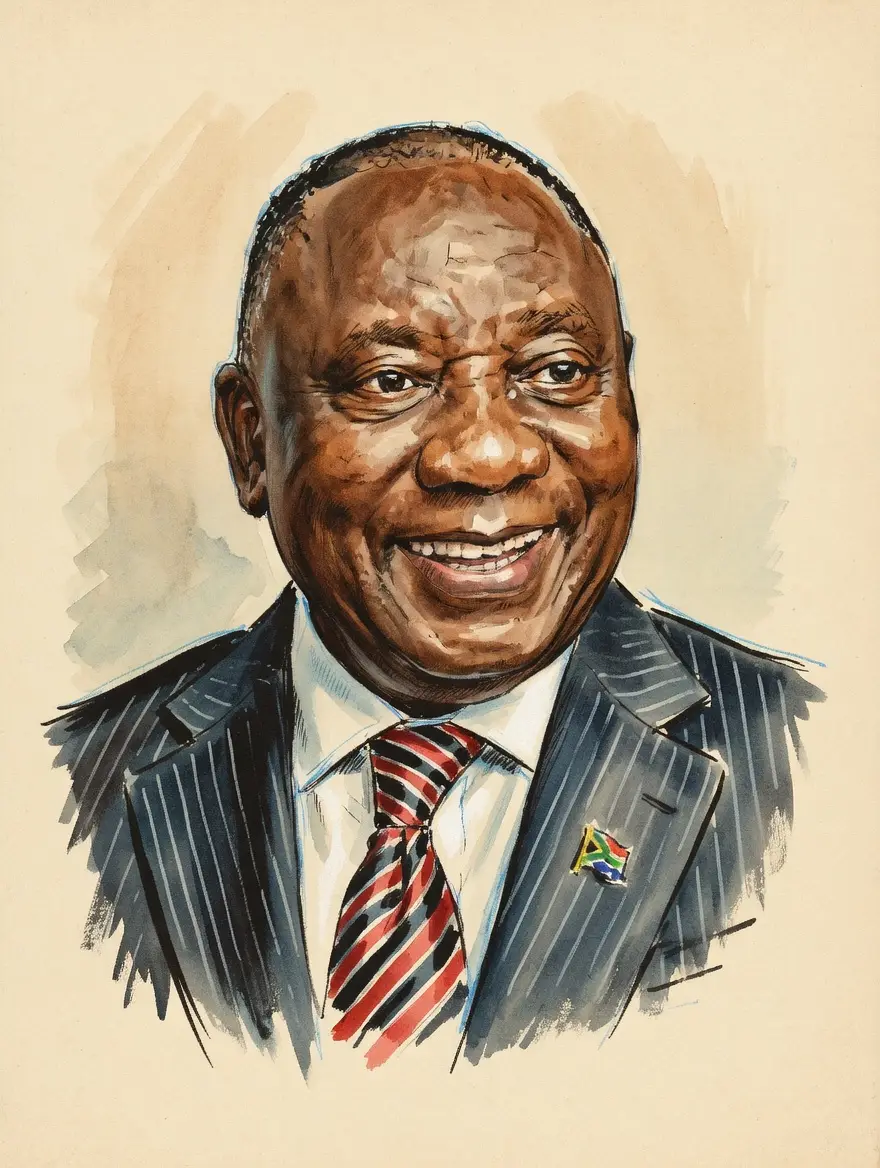
Cyril Ramaphosa on Expropriation Bill
TL;DR
Cyril Ramaphosa signed the Expropriation Bill into law, aligning property acquisition with the Constitution's transformative goals.
Key Points
The President signed the Expropriation Bill into law on January 20, 2025, replacing the 1975 Act.
The enacted law outlines how organs of state may expropriate land for a public purpose or in the public interest.
The legislation mandates negotiation with the owner before expropriation, except in urgent circumstances requiring temporary use of property.
Summary
Cyril Ramaphosa, as President, assented to the Expropriation Act 13 of 2024 on January 20, 2025, officially signing the Expropriation Bill into law, thereby repealing the pre-democratic Expropriation Act of 1975. His action codified a framework for organs of state to expropriate property for a public purpose or in the public interest, adhering to the constitutional principle of just and equitable compensation. The legislation is framed as an essential mechanism to advance land reform, promote inclusivity, and redress the results of past discriminatory laws, as mandated by Section 25 of the Constitution.
The new law explicitly outlines procedures for expropriation, including mandatory negotiation with the property owner before any compulsory acquisition, except in urgent circumstances, and provides for mediation or court adjudication for disputes over compensation. While the law provides for fair compensation based on various factors, it also permits nil compensation in specific scenarios deemed just and equitable, such as for unused land whose owner is only seeking appreciation of market value. The President’s signing was welcomed by his party as a historic milestone in the nation's transformation agenda and a fulfillment of election commitments.
Key Quotes
“The recently adopted Expropriation Act is not a confiscation instrument, but a constitutionally mandated legal process that ensures public access to land in an equitable and just manner as guided by the Constitution,”
“[a]t this stage of our constitutional jurisprudence it is … practically impossible to furnish—and judicially unwise to attempt—a comprehensive definition of property for purposes of section 25.”
Frequently Asked Questions
Cyril Ramaphosa's position was one of final approval, as he signed the Expropriation Bill into law on January 20, 2025. He views the legislation as aligning South Africa's expropriation framework with the Constitution's transformative goals for land reform. The President's action completed the legislative process for the new act.
Yes, the President supported the bill, which followed a five-year process of public consultation and parliamentary deliberation. His action of assenting to the bill demonstrates his commitment to the legislation, which his party welcomed as a vital step for land reform. He positioned the new act as a necessary legal tool for the state.
The Expropriation Act 13 of 2024 replaces the outdated 1975 Act and sets out the procedures for state organs to expropriate property. It guides the process to ensure expropriation is for a public purpose or public interest and is subject to just and equitable compensation, as required by the Constitution.
Sources6
President assents to Expropriation Bill | The Presidency
South Africa: New Expropriation Act Signed into Law | Library of Congress
South Africa's president signs land expropriation bill into law | ConstitutionNet
What's South Africa's land law at the heart of the Trump-Ramaphosa spat? | Al Jazeera
Cyril Ramaphosa signs expropriation bill in South Africa : r/georgism
AFRICAN NATIONAL CONGRESS WELCOMES THE HISTORIC SIGNING OF THE EXPROPRIATION BILL INTO LAW BY PRESIDENT CYRIL RAMAPHOSA – ANC
* This is not an exhaustive list of sources.