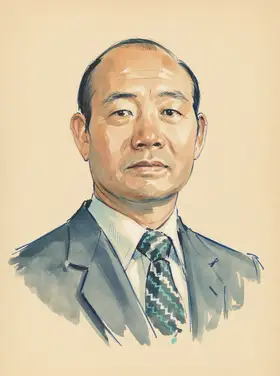
Chun Doo Hwan on Military Coup
TL;DR
Chun Doo Hwan viewed military coups as a necessary, successful mechanism to seize and consolidate absolute political power.
Key Points
The December 12, 1979, mutiny was orchestrated by Chun and his Hanahoe clique to remove his military rivals and seize control of the army's command structure.
He illegally expanded martial law across the nation on May 17, 1980, leading directly to the violent suppression of the Gwangju Democratization Movement.
Chun was convicted of treason and insurrection for orchestrating the 1979 coup and unlawfully subduing the National Assembly following the 1980 crackdown.
Summary
Chun Doo Hwan's position on military coup is demonstrated by his active leadership in two such events: the 12 December 1979 military coup and the 17 May 1980 military coup, which effectively made him the de facto leader of South Korea. The December coup was an internal military move where he arrested the martial law commander and gained firm control of the military hierarchy, often overriding the civilian acting president. Following this consolidation of power, he orchestrated the May 1980 coup by expanding martial law nationwide, closing universities, banning political activities, and brutally suppressing democratic opposition in Gwangju.
His actions were aimed at securing the presidency, as evidenced by his self-promotion and eventual election in August 1980 through the National Conference for Unification. He established the Fifth Republic of Korea under a new constitution designed to grant him broad executive power, continuing the authoritarian rule begun by his predecessor, Park Chung Hee. Chun's belief in the efficacy of military force to achieve political aims is further shown by the fact that he subsequently used extreme violence to maintain this power.
Frequently Asked Questions
Chun Doo Hwan's primary motivation for the military coups, particularly the 12 December 1979 event, was to seize and consolidate political power following the assassination of President Park Chung Hee. By controlling the military investigation and key command posts, he sidelined rivals and positioned himself to take over the government, as evidenced by his subsequent rise to the presidency.
Yes, Chun Doo Hwan was eventually convicted on multiple charges, including leading an insurrection and treason, related to the 1979 coup and the subsequent Gwangju massacre. The Seoul High Court sentenced him to life imprisonment, though he later received a presidential pardon in December 1997.
Chun Doo Hwan's successful military coups effectively ended the brief period of liberalization known as the 'Seoul Spring' and prolonged military dictatorship in South Korea until 1988. His regime, the Fifth Republic, used extreme violence to maintain power and suppressed democratic opposition, most infamously in Gwangju.
Sources9
Chun Doo-hwan - Wikipedia
Chun Doo-Hwan | Biography & Facts | Britannica
Punishment of 1979 coup leader Chun Doo Hwan foreshadows Yoon's potential fate
Washington Backed a Coup Against South Korean Democracy
The Road to 12/12: A Closer Look at South Korea's 1979 military Coup
On this day, 45 years ago, Chun Doo-hwan led a coup to seize control of the military, only weeks after Park Chung-hee was assassinated. Also known as 12.12 Coup. : r/korea
Chun Doo Hwan's Manipulation of the Kwangju Popular Uprising
How Chun Doo-hwan seized power in a coup — and why it's unlikely to happen now
* This is not an exhaustive list of sources.