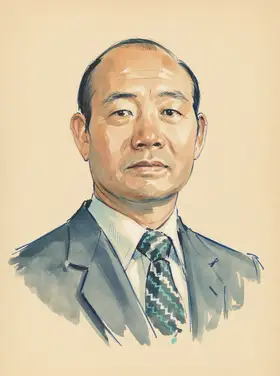
Chun Doo Hwan on Media Censorship
TL;DR
Chun Doo Hwan aggressively censored the media to construct political legitimacy following his military coup and the Kwangju Uprising.
Key Points
The regime systematically sacked 937 members of the press while nationalizing the country's media outlets following the 1980 Kwangju Uprising.
The Basic Press Law of 1980 was enacted, which legalized government supervision over nearly all aspects of journalistic activities, including setting professional qualifications for journalists.
Media managers deliberately excluded and distorted U.S. official statements to construct a false image of American endorsement for the military regime's power.
Summary
Chun Doo Hwan implemented near absolute media censorship as a central means to gain domestic legitimacy after assuming power via a military coup in late 1979 and following the brutal suppression of the Kwangju Popular Uprising in May 1980. His regime systematically sacked members of the press and nationalized media outlets, effectively turning newspapers and television networks into extensions of the ruling apparatus. Information specialists were appointed to manage media policy, using daily reporting guidelines to dictate emphasis, control topics, and screen out any critical voices. The main objective was to construct a favorable public opinion by ensuring that media content, particularly concerning U.S. responses, promoted the image of American endorsement for his military government.
This extensive control over information flow, or media censorship, had a profound effect on the general South Korean public by completely ignoring or distorting U.S. official statements that criticized the regime's actions, such as the extension of martial law. For instance, while the U.S. State Department issued strong condemnations of the crackdown, major Korean newspapers carried headlines implying U.S. support for the military's security commitment instead. The regime also enacted the Basic Press Law of 1980, which legalized government supervision over all journalistic activities and gave the Minister of Culture and Information the power to suspend publications without court decisions, cementing his system of media control.
Frequently Asked Questions
Chun Doo Hwan's primary tool for controlling information was the systematic censorship of the South Korean media. Following his military coup, he purged journalists and nationalized media outlets to ensure they functioned as a propaganda machine for his regime. This included leveraging the Basic Press Law to legally mandate government supervision over news content.
Chun Doo Hwan's regime banned any reporting on the Kwangju Uprising, labeling the unrest as a communist insurrection. The military actively distorted news, ensuring that the narrative presented to the South Korean public implied U.S. support for the crackdown, which was contrary to actual U.S. diplomatic statements.
The government under Chun Doo Hwan enacted the Basic Press Law of 1980, which served as the legal capstone for his extensive media control. While the film industry saw a revision in 1984 that abolished outright censorship in favor of a 'pre-deliberation' system, the broader control over news media remained severe throughout his rule.
Sources7
Chun Doo Hwan's Manipulation of the Kwangju ... - DTIC
Censorship in South Korea
The South Korean media consist of several different types ...
The History of Censorship in South Korean Entertainment ...
My secret photos of South Korea's fight for democracy
Kim Dae-jung's Role in the Democratization of South Korea
* This is not an exhaustive list of sources.