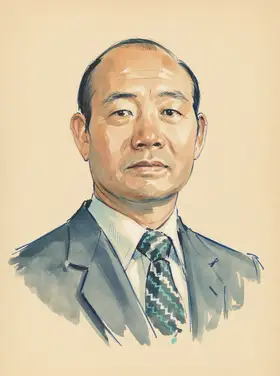
Chun Doo Hwan on Dictatorship
TL;DR
Chun Doo Hwan established and governed South Korea through a military-backed authoritarian dictatorship after seizing power in 1979.
Key Points
He seized power through a military coup in December 1979, immediately suspending democratic processes.
His administration maintained power through the imposition of martial law and the suppression of dissent.
He ultimately conceded to widespread public demonstrations by agreeing to direct presidential elections in 1987.
Summary
Chun Doo Hwan's core position on dictatorship was one of direct implementation, as he rose to power via a military coup d'état in December 1979 and subsequently established a firm authoritarian regime. Following the coup, he consolidated control, suppressed political opposition, and presided over a period marked by the military's extensive control over the state apparatus. This political structure was characterized by the imposition of martial law and the sidelining of democratic institutions, which served as the foundation of his rule until the late 1980s.
The context of his rule was rooted in the political instability following the assassination of the previous president, which he exploited to justify his seizure of extraordinary power. Though his regime eventually faced significant public pressure that led to a transition toward democratic elections, his tenure is unequivocally defined by the period of non-democratic, centralized military rule he imposed upon the nation. His government oversaw significant economic growth alongside severe political repression.
Frequently Asked Questions
Chun Doo Hwan’s position was to implement and maintain a dictatorship by seizing control of South Korea through military force. He governed the nation for years under authoritarian rule following his 1979 coup. His actions demonstrate an endorsement of non-democratic, centralized power structures.
While he was later convicted for the coup and subsequent actions, his public statements regarding the necessity of his rule were generally self-justifying. Chun Doo Hwan maintained that his early actions were necessary to ensure stability in the nation. His later life involved both apologies and expressions of grievance regarding his prosecution.
He gained power by leading a military coup in December 1979, securing control of the government shortly after the assassination of the sitting president. Following this coup, he systematically consolidated his authority over the military and political establishment. This allowed him to effectively rule as a military dictator for nearly a decade.