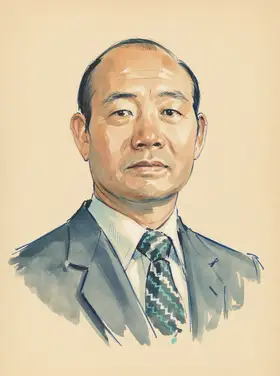
Chun Doo Hwan
- Known for
- South Korean president, military dictator
- Born in
- Hapcheon County, Empire of Japan
- Education
- Bachelor of Science, Korea Military Academy
Chun Doo Hwan was a South Korean army general who seized power via a military coup in 1979, establishing the authoritarian Fifth Republic of Korea. His rule was defined by consolidating military control, economic growth, and brutal suppression of dissent, most notably the Gwangju Uprising.
Signature Positions
Chun's tenure involved rapid centralization of authority and significant policy shifts:
- Military Coup & Martial Law: Orchestrated the 12 December 1979 mutiny and expanded martial law on May 17, 1980, to solidify control.
- Gwangju Uprising: Ordered the violent suppression of protests, leading to a massacre and earning him the moniker "The Butcher of Gwangju."
- Economic Policy: Oversee a period of significant economic growth, achieving South Korea's first trade surplus in 1986.
- Political Control: Abolished existing political parties and instituted the 3S Policy (Sex, Screen, Sports) to distract the public from political repression.
- Foreign Policy: Sought legitimacy from the US by ending the South Korean nuclear weapons program and pledging limits on missile range.
Notable Tensions
Chun's legacy is fraught with contradictions and unresolved legal issues:
- Democracy vs. Dictatorship: While his regime implemented some liberalization measures (like allowing direct elections in 1987), these were concessions made under extreme pressure from the June Struggle Democratization Movement.
- Legal Fate: Convicted of treason and corruption, he received a death sentence (later commuted) but was pardoned in 1997, sparking outrage over unpaid fines derived from his regime.
- Historical Legacy: Maintained an unapologetic stance regarding his rule, which was sharply contrasted by his grandson's public condemnation and apologies for the Gwangju Uprising.
Chun succeeded Park Chung Hee by seizing power through military action, much like his predecessor. However, Chun's government ultimately proved less durable, succumbing to popular pressure for democracy in 1987. His departure led to a peaceful transfer of power to Roh Tae-woo, who continued some of Chun's policies but oversaw democratic reforms.