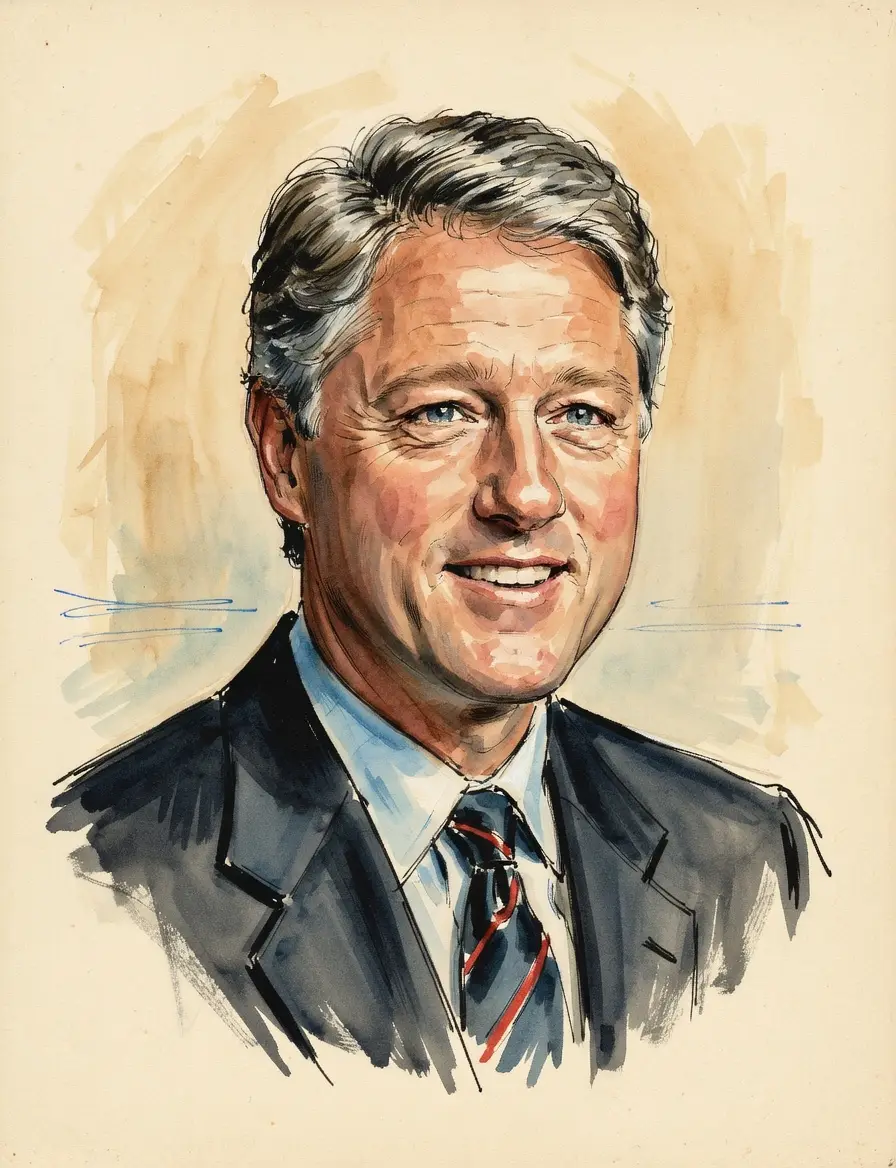
Bill Clinton on Trade War
TL;DR
Bill Clinton generally favored global trade agreements while opposing unilateral protectionist measures like punitive tariffs that could spark trade wars.
Key Points
He signed the United States–China Relations Act of 2000, which granted China permanent normal trade relations status upon its WTO entry in 2001.
The administration imposed unilateral duties of 100 percent on $520 million worth of European products in a dispute over banana import policies in 1999.
When threatening China over human rights in 1993, he eventually backed down from imposing sanctions because Chinese leaders believed the U.S. needed China more.
Summary
Bill Clinton's administration actively pursued and championed major free trade agreements, most notably the North American Free Trade Agreement (NAFTA), which he signed into law in December 1993. His core position centered on the belief that expanded global trade would benefit the United States economically by opening foreign markets to American goods and services without forcing the export of manufacturing jobs. This conviction was strongly evident when he signed the United States–China Relations Act of 2000, granting China permanent normal trade relations status to facilitate its entry into the World Trade Organization (WTO).
However, the administration also engaged in actions that critics labeled as initiating a trade war, particularly with the European Union over bananas, where he imposed significant retaliatory duties. While he urged the renewal of China's trade status despite tensions, the administration’s preference was to work through multilateral institutions like the WTO rather than resorting to unilateral sanctions, viewing such actions as undermining the rules-based international trading system. His approach often involved supporting trade liberalization while simultaneously using the threat of trade penalties to enforce existing agreements or address specific grievances.
Key Quotes
"Economically, this agreement is the equivalent of a one-way street. It requires China to open its markets—with a fifth of the world's population, potentially the biggest markets in the world—to both our products and services in unprecedented new ways"
"When then-President Bill Clinton signed the North American Free Trade Agreement in a White House ceremony in December 1993, he called it “a defining moment” for the United States and praised Mexico and Canada as “our partners in the future that we are trying to make together.”
Frequently Asked Questions
Bill Clinton generally favored expanding international trade through agreements like NAFTA and China's accession to the WTO. He was against unilateral actions like tariffs that could escalate into broader trade wars, viewing them as undermining the WTO system.
Yes, despite his free-trade orientation, the Clinton administration imposed punitive 100 percent duties on a range of European goods in 1999 over a banana import dispute. Critics cited this move as an example of him fighting a transatlantic trade war.
Sources7
Trump May Threaten a Trade War Over NAFTA, but His Options Are Limited
United States–China Relations Act of 2000 - Wikipedia
U.S.-China trade war: A zero-sum game | Cornell SC Johnson
The High Cost of Clinton's Trade War with the European Union
U.S.-China Relations Under a Romney Presidency | Brookings
Despite Tensions, Clinton Urges Renewal of China's Trade Status
2018 China–United States trade war | History | Research Starters | EBSCO Research
* This is not an exhaustive list of sources.