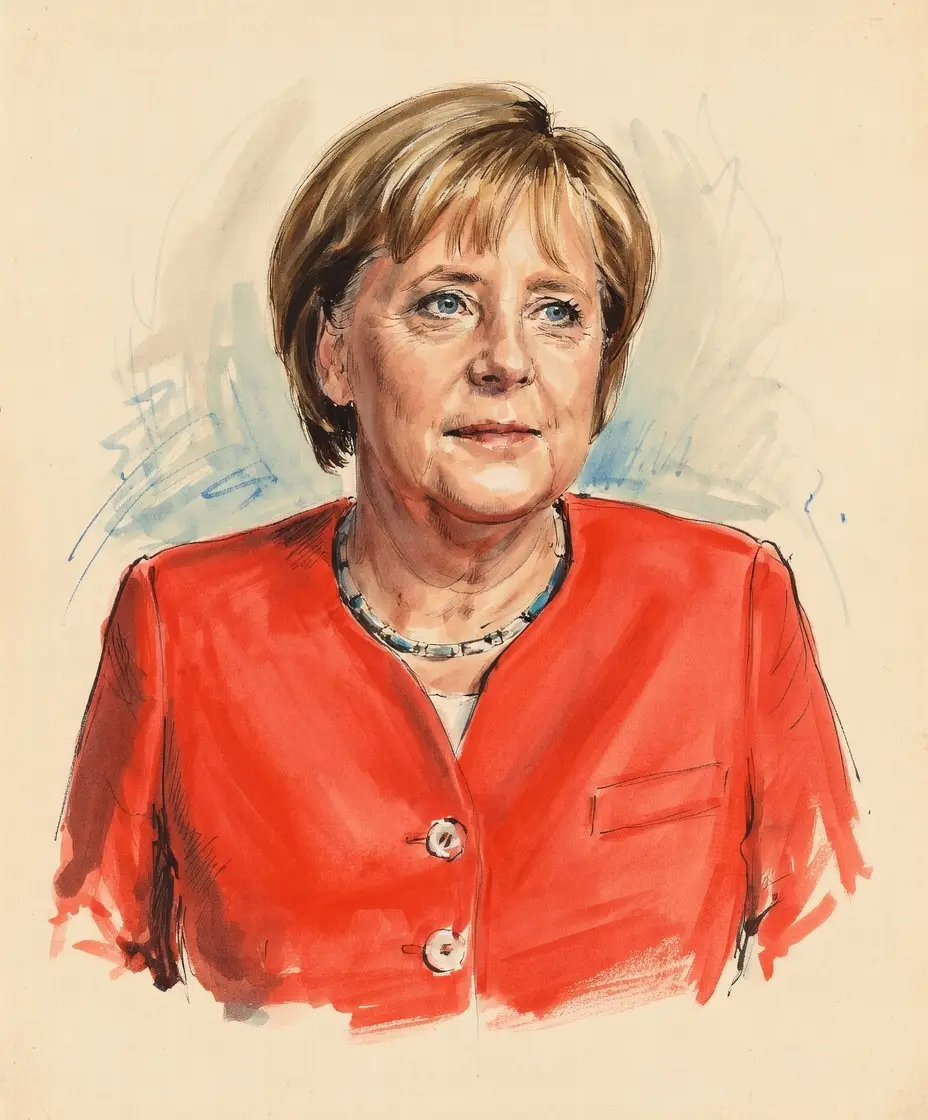
Angela Merkel on Russia
TL;DR
Angela Merkel maintained a policy of critical dialogue with Russia, balancing economic ties with principled opposition to its foreign aggression.
Key Points
She reaffirmed her decision to oppose offering Ukraine a NATO Membership Action Plan at the 2008 Bucharest summit, despite later criticism.
Merkel took the lead in imposing rafts of EU sanctions against Russia after the 2014 annexation of Crimea and subsequent conflict in Donbas.
The former chancellor publicly supported findings that Russian opposition activist Alexei Navalny was poisoned with a nerve agent in 2020.
During her tenure, Germany's relationship with Russia degenerated from a partnership into a transactional one marked by increasing mutual criticism.
Summary
Angela Merkel's approach to Russia during her tenure was characterized by a commitment to pragmatic engagement, even as relations with Moscow deteriorated significantly, particularly after the 2014 annexation of Crimea. She consistently sought to maintain channels of communication, most notably by leading marathon negotiations in Minsk to broker a ceasefire in Donbas, demonstrating a preference for critical dialogue over outright isolation of the Kremlin. However, she was also a key figure in imposing EU sanctions on Russia following its forceful actions, viewing its attempts to change European borders as upsetting the post-Cold War order. This dual approach meant that while she maintained a working relationship with President Vladimir Putin, her personal relationship was described as decorous but lacking warmth, unlike that of her predecessor.
Following Russia's full-scale invasion of Ukraine, Merkel's legacy regarding Russia has faced intense scrutiny, with some critics suggesting a willful ignorance regarding Putin’s imperial ambitions and dependence on Russian gas was a significant miscalculation. Despite criticism, she has not expressed explicit regret over major policy decisions, such as her opposition to offering Ukraine a NATO membership action plan at the 2008 Bucharest summit, a decision she argued was a potential "battle cry" to the Russian leader. Her strategy remained rooted in managing rather than resolving deep-seated problems, a governing style that defined much of her sixteen years in office regarding relations with Moscow.
Frequently Asked Questions
Angela Merkel pursued a policy of maintaining critical dialogue and engagement with Russia, emphasizing the need to keep communication open even while disagreeing with its policies. She believed Russia remained an 'indispensable geopolitical factor' due to its power and nuclear arsenal.
While the former chancellor has not offered a self-critical examination or apologized for her past policy course, the full-scale invasion has led to renewed scrutiny of her previous engagement strategy. Her post-office commentary has largely reaffirmed her core decisions, such as the 2008 NATO summit stance.
Angela Merkel maintained a relationship with President Putin that was apparently decorous but not overly close, noting his inclination for power games and childhood-like behavior. She stated she always knew he wanted to destroy Europe, yet still pursued engagement for stability.
Sources4
In New Book, Merkel Justifies Stance On Ukraine At 2008 NATO Summit
Merkel's lack of regrets illustrates the fallacies of Germany's Russia policy
Merkel's Legacy, as Seen From Russia
Merkel played key role during Russia's invasion of Ukraine - Spiegel
* This is not an exhaustive list of sources.