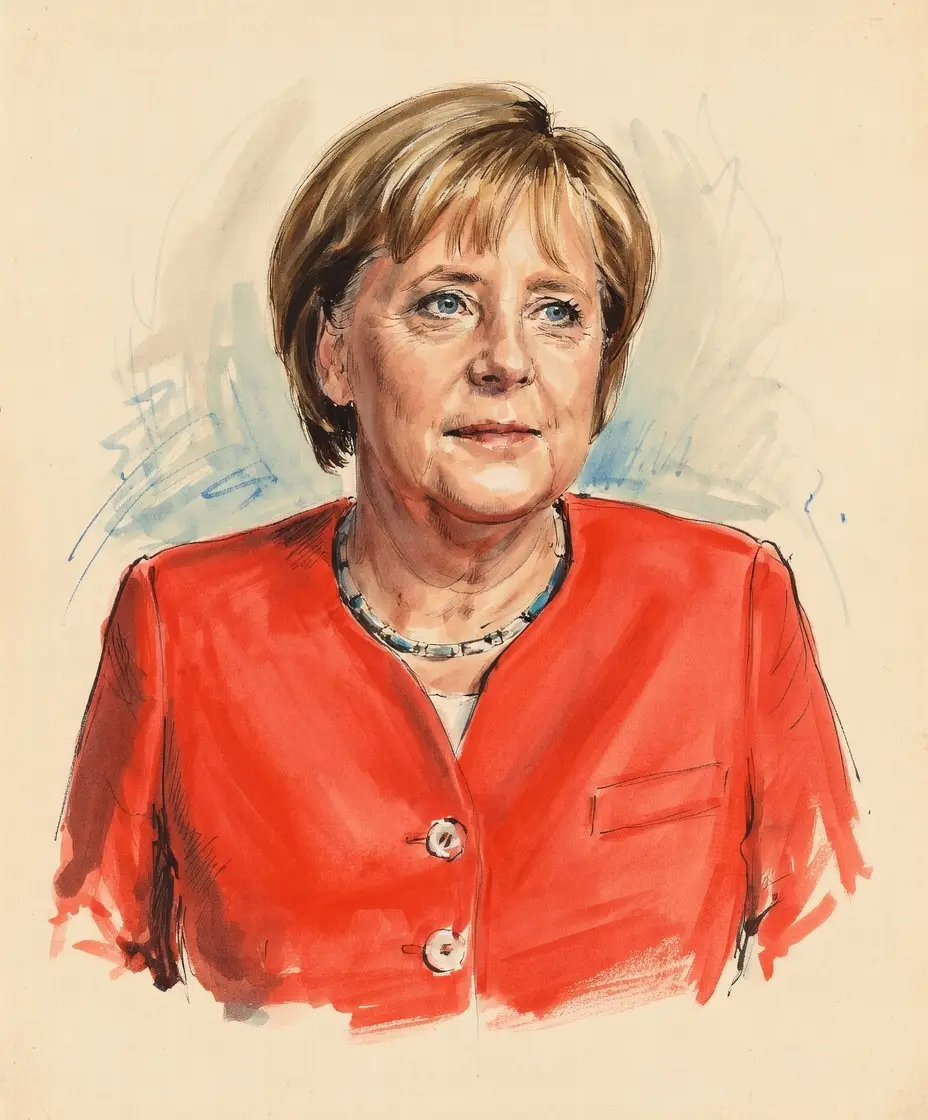
Angela Merkel on European Union
TL;DR
Angela Merkel consistently championed European Union stability and deeper integration, often acting as the pragmatic crisis manager.
Key Points
She actively blocked Ukraine and Georgia's path to NATO membership during the 2008 Bucharest summit.
In July 2020, she strongly supported the creation of the €750bn Next Generation EU recovery fund, backed by joint EU borrowing.
During her German Presidency in 2020, she outlined five priorities: fundamental rights, solidarity, climate change, digitisation, and Europe's role in the world.
Summary
Chancellor Angela Merkel’s core position on the European Union was one of pragmatic commitment, viewing a strong, unified bloc as essential for Germany’s prosperity and global standing. Throughout her tenure, she repeatedly earned recognition as the de facto leader of the EU, often by bridging internal divides and acting as the principal crisis manager during turbulent periods like the Eurozone debt crisis and the migration influx. Her approach was frequently characterized as 'driving by sight,' focusing on immediate stabilization and achieving compromises, such as resisting a 'Grexit' despite initial austerity skepticism from her finance minister, or later championing the unprecedented joint EU borrowing for the Covid recovery fund.
Her evolution involved shifting political weight toward the European Council over the Commission, which critics argue limited grand European visions but allowed Germany to set the integration tempo. While praised for keeping the Union together through successive threats, including Brexit and external geopolitical pressure, Merkel also faced criticism for a perceived lack of proactive vision beyond crisis management, and for decisions like promoting joint EU borrowing only after significant political shifts occurred. Nevertheless, her efforts to ensure EU cohesion and back key institutional figures, like supporting Mario Draghi for the ECB, reflect a deep, if often cautious, belief in the necessity of the European project.
Key Quotes
“We must get used to taking our fate into our own hands,“
“Do we dare more Europe?”
Frequently Asked Questions
Angela Merkel was fundamentally a strong advocate for the European Union, viewing it as crucial for German interests and European stability. She spent much of her time in office acting as a consensus-builder and crisis manager to hold the bloc together through multiple severe challenges.
While she aimed to stabilize the EU, her style was often pragmatic rather than visionary, leading to the criticism of 'driving by sight.' She did, however, move towards deeper integration when crises necessitated it, notably supporting joint EU debt for recovery after the pandemic.
She managed the Eurozone sovereign debt crisis, where she was credited with saving the euro by coordinating policies and resisting a Greek exit, and the 2015 migration crisis, where her decision to open borders was both lauded and highly criticized.
Sources8
The crisis manager: Angela Merkel's double-edged European legacy
Davos: Merkel Calls for a Strong Europe and Multilateralism
Chancellor Angela Merkel Asks “Do We Dare More Europe” Amidst Widespread Skepticism
The Europe Angela Merkel Leaves Behind
Angela Merkel presents German Presidency priorities to the European Parliament
Angela Merkel Didn't Just Save Europe. She Also Made It More Resilient
Goodbye to Merkel: Has she left Europe a better place?
Angela Merkel - Wikipedia
* This is not an exhaustive list of sources.