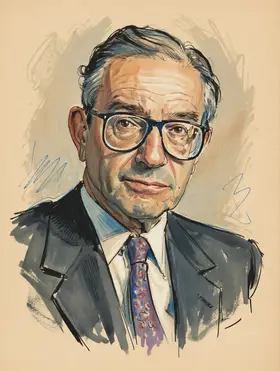
Alan Greenspan
100 years old·Republican Party·Former Chair of the Federal Reserve
- Known for
- Federal Reserve Chairman, Free-market ideology
- Born in
- New York City, United States
- Education
- Ph.D. Economics, Columbia University
Alan Greenspan, the 13th Chairman of the Federal Reserve from 1987 to 2006, is one of the most influential economists of his era. Serving under four presidents, his tenure was marked by both economic booms and severe crises. He remains a polarizing figure, defined by his commitment to free-market principles and his evolution on regulation.
Signature Positions
Greenspan's defining positions often centered on monetary policy and market philosophy:
- Monetary Policy: Largely followed Austrian economics and monetarist principles, implementing actions known as the "Greenspan put" to support financial systems during crashes.
- Regulation: Strongly favored laissez-faire capitalism and self-regulation, though he later admitted his belief in free markets' self-correcting power was flawed.
- Social Security: Advocated for Social Security privatization and tax cuts, leading to criticism for politicizing his role.
- Housing Bubble: Initially supported innovative credit products like subprime loans but later acknowledged the housing bubble's risks too late in his tenure.
- Tariffs: Opposed tariffs against China, suggesting compensation for displaced workers through retraining programs.
How Views Have Evolved
Greenspan's core belief in unfettered markets underwent significant shifts:
- Ayn Rand/Objectivism: He was a dedicated proponent of Objectivism in the 1950s and 60s, even writing for Rand's work, but later compromised these principles while at the Fed.
- Deregulation: He expressed shocked disbelief in 2008 regarding the financial crisis, admitting his ideology was flawed regarding the self-interest of lending institutions, conceding errors on derivatives regulation.
Notable Tensions
Greenspan’s legacy is complicated by criticisms of his decisions and political alignment:
- Criticism for Bubbles: Many attribute the dot-com bubble and the subprime mortgage crisis to his easy-money policies and historic low-interest rates.
- Politicization: Democratic leaders accused him of being a "political hack" for supporting George W. Bush's tax cuts and privatization plans.
- Objectivist Critics: Some, like Harry Binswanger, argued his Fed actions abandoned his fundamental free-market principles.