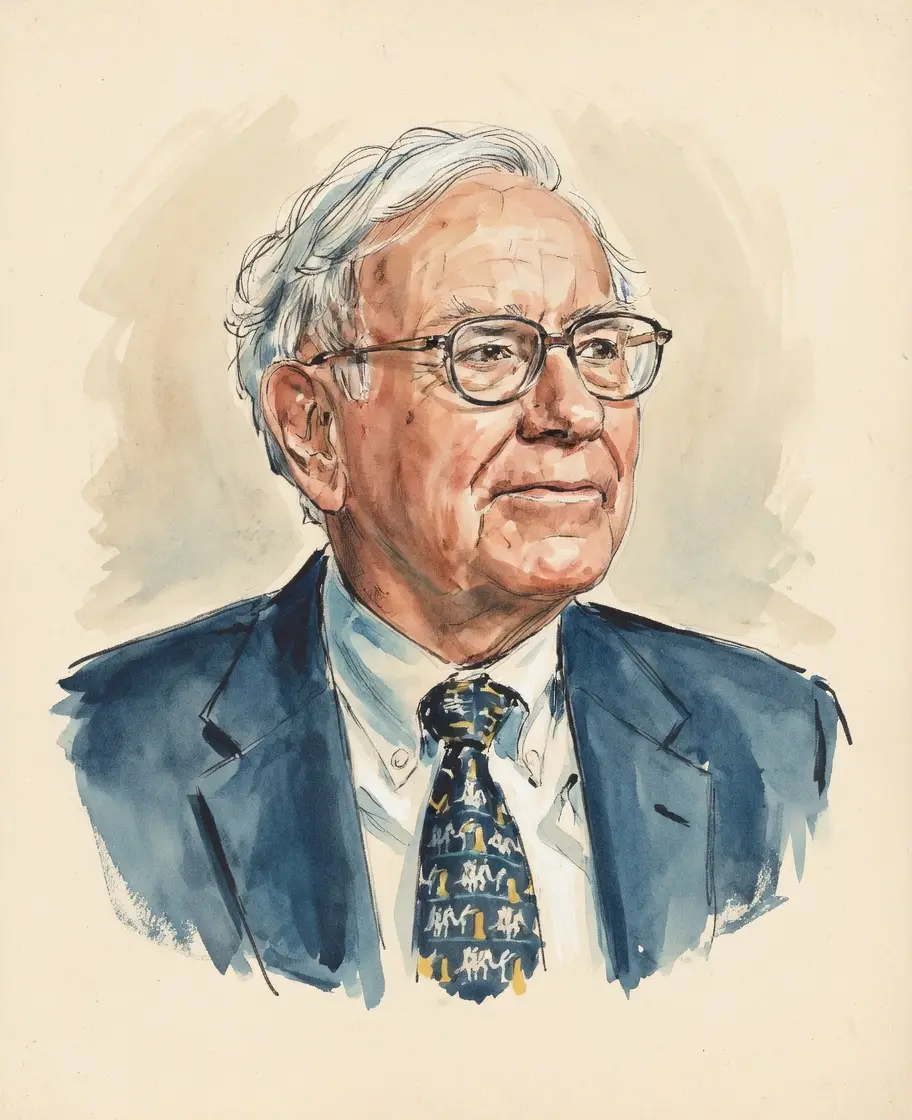
Warren Buffett on Index Funds
TL;DR
Warren Buffett consistently recommends low-cost index funds as the superior investment vehicle for the vast majority of people.
Key Points
He has consistently recommended that for most people, the best action is to own an S&P 500 index fund.
He stipulated in his will that 90% of the cash left to his wife should be put into a very low-cost S&P 500 index fund.
In 1993, he stated that the 'know-nothing' investor can outperform most investment professionals by periodically investing in an index fund.
Summary
Warren Buffett has long been an unwavering proponent of index investing, frequently advising that the best path for most institutional and individual investors is to own a low-cost index fund, specifically one tracking the S&P 500. He asserts that the 'know-nothing' investor, by periodically investing in such a vehicle, can outperform the results achieved by the majority of investment professionals after fees and expenses are factored in. The core evidence supporting his stance rests on the mathematical certainty that high fees and self-defeating investor behavior, often associated with active management, systematically erode returns, making passive investing the most reliable path to satisfactory long-term results.
His conviction in this strategy is demonstrated not just through public advocacy but also in his personal estate planning, where he directed that the majority of the assets left to his wife be invested in a low-cost S&P 500 index fund alongside short-term government bonds. He views the attempt to time the market or pick individual winners as a source of unnecessary excitement and high potential for loss for the average person. For those unwilling or unable to perform the rigorous analysis required for successful stock picking, the broad market index fund offers guaranteed exposure to the long-term growth of American capitalism while minimizing costs and emotional pitfalls.
Frequently Asked Questions
Warren Buffett’s core advice is that the great majority of investors should put the bulk of their equity capital into a low-cost index fund that tracks a broad market benchmark like the S&P 500. He views this as the simplest and most effective way for non-professionals to capture long-term market returns without succumbing to the high costs and behavioral errors associated with active stock picking. He believes this approach will beat the net results of most active managers over time.
No, his position on index funds has remained resolute and consistent over many years, dating back to at least 1993. He continues to champion them today as the best default investment for the average person. While he employs active management for Berkshire Hathaway, he explicitly separates that complex operation from the advice he gives to regular investors.
He favors them because active management inherently involves higher fees and a greater temptation for investors to engage in costly, emotion-driven trading behaviors like trying to time the market. By contrast, an index fund offers automatic diversification across a broad swath of American industry, minimizes expenses, and helps the investor remain patient and disciplined through market ups and downs.
Sources5
Quotes by Warren Buffett | Index Fund Advisors, Inc.
7 reasons why Warren Buffett thinks you should be an index investor
Warren Buffett Says Buy This Vanguard Index Fund -- It Could Turn $400 Per Month Into $835,000 With Help From Nvidia, Apple, and Microsoft
Warren Buffett Says Buy This Vanguard Index Fund -- It Could Turn $400 Per Month Into $835,000 With Help From Nvidia, Apple, and Microsoft | Nasdaq
Lessons From Warren Buffett: Why Index Funds Are Good for a Certain Type of Investor : r/ValueInvesting
* This is not an exhaustive list of sources.