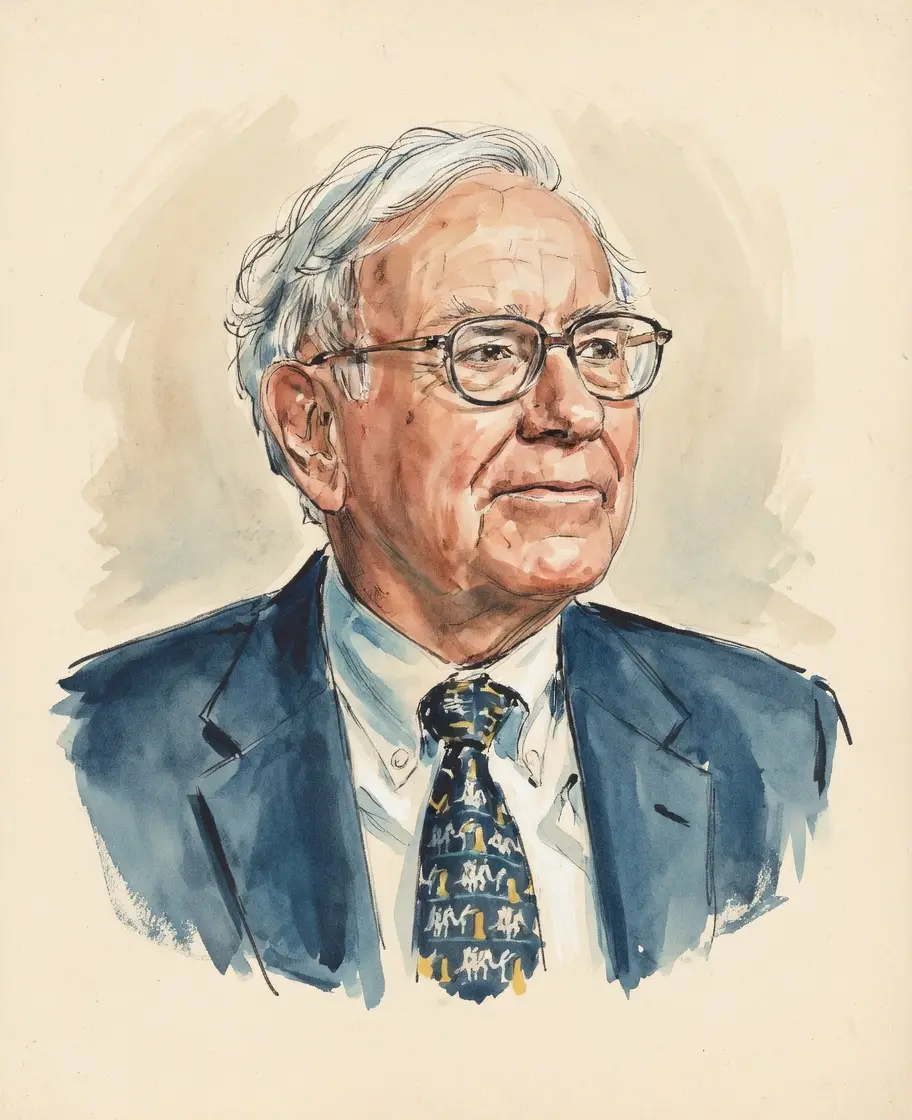
Warren Buffett on Gold
TL;DR
Warren Buffett fundamentally believes gold is a nonproductive, fear-driven asset that severely underperforms income-generating businesses over time.
Key Points
He frequently points out that for every dollar gained in American business from 1942 to 2018, gold yielded less than a penny of gain on the same investment.
In Q2 2020, Berkshire Hathaway purchased a small stake in gold miner Barrick Gold, but subsequently exited the entire position by the end of 2020.
He was attracted to a past large investment in silver because it had a verifiable supply-and-demand imbalance related to industrial consumption, unlike gold.
Summary
Warren Buffett remains a vocal and consistent skeptic of investing in physical gold, centering his argument on the metal being a nonproductive asset. He asserts that unlike owning a business, which generates earnings, dividends, or crops, gold simply sits and generates nothing over an eternity, even if it can be physically held or fondled. Historical comparisons made by the investor starkly illustrate this, showing a $10,000 investment in the S&P 500 in 1942 grew to $51 million by 2018, while the same amount in gold only grew to about $400,000, meaning gold captured less than a penny of gain for every dollar made in American business.
His aversion stems from gold's price being driven by the hope that fearful people will pay more later, which he views as speculation rather than investing based on fundamentals. This contrasts with productive assets like farms or companies which provide essential goods or services. However, he has made tactical exceptions: Berkshire Hathaway briefly held a stake in a gold miner, Barrick Gold, in 2020, which was attributed to portfolio managers and quickly exited, and he previously held a large silver position due to a verifiable industrial supply-demand imbalance, a specific, quantifiable setup gold never offered him.
Frequently Asked Questions
Warren Buffett strongly opposes investing in physical gold, labeling it a nonproductive asset that only appreciates if someone else is willing to pay more for it later. He prefers assets, like businesses, that generate cash flow or produce goods and services over time.
No, his core stance against holding physical gold has remained consistent over many years. While Berkshire Hathaway briefly held shares in a gold miner in 2020, this was seen as a tactical move, not a fundamental shift in his aversion to the commodity itself.
He stated that an ounce of gold an owner possesses will remain unchanged in size forever and will never produce anything. He contrasts this with productive assets, such as a farm or a business, which continually yield crops or earnings.
Sources5
Warren Buffett Called Gold a Do-Nothing Asset in 2018. Here's What a $10,000 Bet Is Worth Today.
Buffett's unpopular view on the gold boom
Warren Buffett Quotes on Gold as a Bad Investment; Was He Right?
The longer quote from Warren Buffett is very interesting Today the world's gold stock is about 170,000 metric tons. If all of this gold were melded together, it would form a cube of about 68 feet per side. (Picture it fitting comfortably within a baseball infield.) At $1,750 per ounce – gold's price as I write this – its value would be $9.6 trillion. Call this cube pile A. …
If this trend continues at what point will Warren buffet admit he is wrong about Gold? : r/Gold
* This is not an exhaustive list of sources.