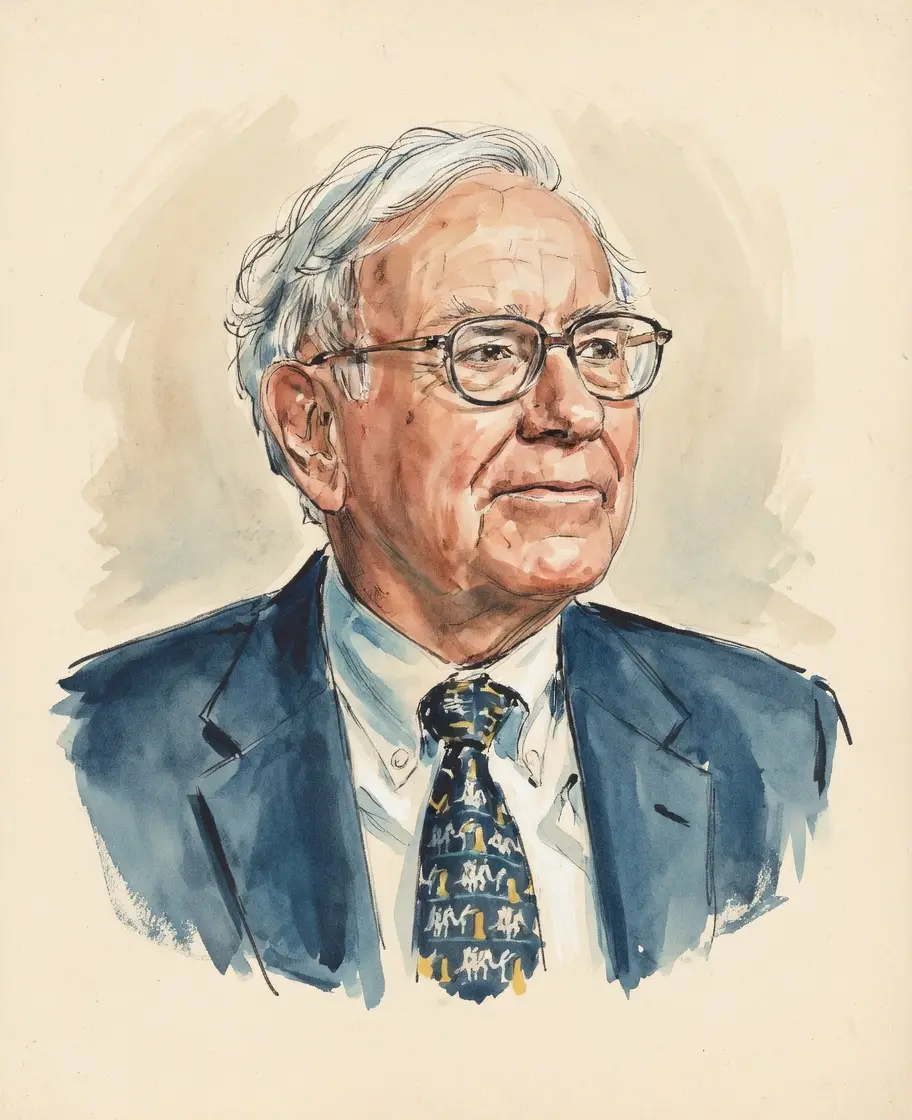
Warren Buffett on Banks
TL;DR
Warren Buffett maintains a long-term belief in banks as essential businesses while exercising caution regarding recent turbulence and avoiding smaller institutions.
Key Points
He bailed out Goldman Sachs with a $5 billion investment during the financial crisis and made a similar $5 billion bet in Bank of America in 2011.
He has sold stakes in several banks, including JPMorgan Chase, Goldman Sachs Group, and Wells Fargo, while his only remaining large position is Bank of America.
He stated that in the event of a banking crisis, stockholders will be the first to be wiped out, but depositors should not lose their money (2023).
Summary
Warren Buffett has historically viewed banks as fundamentally essential businesses that, at their core, are simple operations involving paying interest on deposits and lending at a higher rate. This foundational view, coupled with banks historically trading at attractive valuations compared to the broader market, has drawn Berkshire Hathaway to invest in the sector for decades. His past actions include providing high-profile bailouts to major institutions like Goldman Sachs in 2008 and Bank of America in 2011, demonstrating a willingness to support the system when conditions are fearful for others.
Despite this foundational affinity, his current position is characterized by caution, especially following recent regional bank failures. He has actively avoided investing in smaller or regional banks, preferring those with trillions in assets, and has even sold down stakes in several large banks between 2020 and 2022. Furthermore, the concentration of Berkshire’s portfolio in Apple means the overall financial sector's percentage has declined, suggesting a preference for exceptional businesses outside the inherent risks of banking.
Frequently Asked Questions
Warren Buffett generally views banks as essential businesses that are profitable long-term if they stick to the fundamental business of lending. However, his current stance is one of caution, particularly after recent turbulence in the sector, leading him to avoid smaller institutions.
Yes, his investment in banks has evolved; while he loves the sector fundamentally, he has sold down several major bank holdings since 2020 and now prefers only the largest banks. This contrasts with his historical willingness to invest heavily during times of industry distress.
He is certain that depositors will be saved and not lose their money in a banking crisis scenario. Conversely, he believes stockholders are the first to be wiped out if a bank performs poorly or makes mistakes.
Sources7
Warren Buffett: My Strategy For Investing In Banks
Warren Buffett says American banks could face more turbulence ahead but deposits are safe
Warren Buffett skips big banks — for now
Warren Buffett says Berkshire cautious on banking sector
Warren Buffett Loves Banks, But Will He Buy Them This Time? | East Oregonian
Warren Buffett Has a History With Banks—as a Critic and Investor
Why Warren Buffett Sold Most of His Bank Stocks - Steady Compounding
* This is not an exhaustive list of sources.