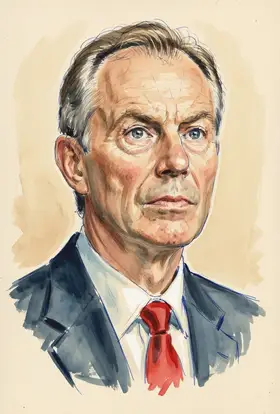
Tony Blair on Leadership Lessons for the 21st Century
TL;DR
Tony Blair distills his governing experience into a practical manual for contemporary political leadership effectiveness and change-making.
Key Points
The book details that successful governing relies on key characteristics he wishes he had known when beginning his premiership in 1997.
A central theme is that a leader must have the courage to act and take risks based on a belief in a higher purpose for the people.
He argues that change takes significant, focused effort, estimating it requires at least ten years, preferably fifteen to twenty, to truly change a country.
Summary
Tony Blair's position on Leadership Lessons for the 21st Century is articulated through his book, which serves as the political leadership manual he wished he possessed when he became prime minister in 1997. He learned the precepts of governing through over a decade of leading a country and observing global leaders, leading him to codify the key characteristics of successful government. The work shares his gained insights from personal experience and subsequent work with political leaders globally through his Institute, aiming to show aspiring leaders how to move from conceptualizing change to actualizing it.
This masterclass in political leadership is structured in short, pithy chapters addressing critical governance questions relevant to the modern era. Key areas explored include organizing the center of government, prioritizing and developing plans, hiring personnel, managing crises, balancing short-term wins with structural change, dealing with bureaucracy, attracting investment, and leveraging the technological revolution. The author stresses that the quality of leadership now more than ever determines a nation's success or failure, providing lessons drawn from various political systems worldwide.
Key Quotes
"Leaders have the courage not to go with the flow,. They speak up when others stay silent. They act when others hesitate. They take risk, not because they fail to identify it as risk but because thy believe in a higher purpose means risk should be taken. The Leader should do what he/she believes in in the interests of the people. If the people end up disliking the outcome, sack the LEasersLeaders. But the job of the Leaders is to lead.
Frequently Asked Questions
Tony Blair's main point is that effective political leadership requires understanding and applying specific, learnable precepts of good governance to achieve transformational change. He presents his book as a manual containing these insights gained from his decade as prime minister and subsequent global advisory work.
His book addresses critical questions such as how a leader should organize their office, set priorities, hire staff, handle crises, and manage bureaucratic resistance. Furthermore, he discusses balancing short-term achievements with long-term structural reform in the face of 21st-century challenges.
Yes, Tony Blair strongly believes that the quality of a country's governance and leadership is the determining factor in whether that nation will succeed or flounder globally. He notes that nations with similar resources often diverge based on leadership effectiveness.
Sources4
On Leadership: Lessons for the 21st Century by Tony Blair
On Leadership: Lessons for the 21st Century by Tony Blair | Goodreads
Book Review. Tony Blair. 'On Leadership: Lessons for the 21st Century' – Aaron McLoughlin
On Leadership: Lessons for the 21st Century - Tony Blair - Google Books
* This is not an exhaustive list of sources.