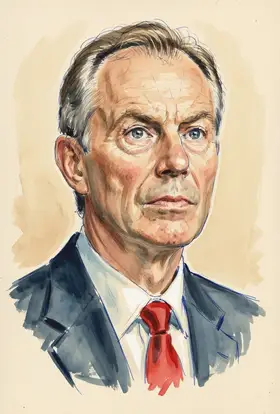
Tony Blair on Globalization
TL;DR
Tony Blair strongly advocates for embracing globalization as an inevitable, beneficial reality that requires active management to serve the majority.
Key Points
He believes that globalization is a fact of the changing world that cannot be stopped by governments, only managed effectively.
He stressed the need to actively counter populist and isolationist movements by demonstrating that globalization can deliver for the broad mass of people.
He argued that his government aimed to prepare Britain for globalization through heavy investment in education and skills, not by resisting it with tariffs or protectionism.
Summary
Tony Blair contends that globalization is an omnipotent, non-negotiable force, similar to a season, which the United Kingdom must fully embrace to maintain competitiveness and secure its future. He argues that resisting it is futile, citing the rapid changes driven by cheap travel and technology, and that nations must adapt swiftly to garner its vast potential benefits, rather than clinging to outdated models.
His core position is that the argument for globalization cannot be won merely by extolling its benefits, but must be accompanied by a genuine policy agenda of change to mitigate its risks and address the real anxieties it evokes. He stresses that globalization is not equivalent to laissez-faire economics; instead, it requires strategic, empowering government intervention in areas like education, skills, and infrastructure to prepare the populace for change and ensure social solidarity remains relevant in this open world.
Key Quotes
globalisation is a force of nature, not a policy: it is a fact
Frequently Asked Questions
Tony Blair views globalization as an inevitable and powerful force of change that has made the world more prosperous overall. His position is that politicians must actively shape and manage this process to ensure its benefits are shared widely, rather than attempting to halt it.
No, he strongly believed that globalization was a reality, comparing it to the inevitability of autumn following summer, and therefore could not be stopped by national policies like tariffs. He maintained that the correct approach was adaptation and preparation.
He argues that managing globalization requires a policy agenda focused on preparing citizens for change through education and skills development, while also addressing the cultural and economic grievances that fuel anti-globalization sentiment. This must be done without resorting to protectionism.