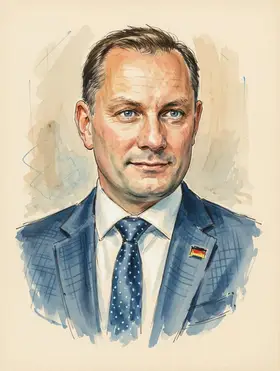
Tino Chrupalla on East Germany
TL;DR
Tino Chrupalla, born in East Germany, recalls unity while endorsing the benefits of reunification for the region.
Key Points
He was born on April 14, 1975, in Weißwasser, which was part of East Germany at the time.
He made a stir in a 2019 debate by accusing the then-chancellor of using propaganda and domination strategies learned from her time in East Germany's Free German Youth.
The AfD, under his co-leadership, consistently garners its strongest electoral support in the five 'new' federal states that constituted the former East Germany.
Summary
Tino Chrupalla, born in Weißwasser in what was then East Germany, has expressed specific views regarding his upbringing and the period before German reunification. He fondly remembers the unity among East Germans and their connection to homeland and folk songs. However, he simultaneously views the act of reunification itself as having been the best possible outcome for the residents of the former GDR. His position appears to balance a positive recollection of certain aspects of life in the GDR with a firm endorsement of the unified German state.
This nuanced view contrasts with some of his political actions where he suggests a rejection of current German culture, such as his criticism of the current federal government for not promoting 'German cultural heritage' more, although he struggled to name a German poem when questioned by a child reporter. His focus on regional identity and traditions, which resonates strongly in the East where the AfD sees pronounced support, frames his perspective on the legacy of East Germany.
Key Quotes
We want to decide for ourselves in Germany who can come and who can stay
Frequently Asked Questions
Tino Chrupalla was born in Weißwasser, which was located in East Germany (GDR) at the time of his birth in 1975. He has spoken about his childhood there, reminiscing positively about the sense of community among East Germans. He believes that reunification was ultimately the best thing for the region's residents.
The co-chairman views the legacy with a mixed perspective, recalling the unity and cultural aspects of East Germany fondly. However, he clearly supports the result of reunification, which he states was the best outcome for East Germans. His party's strong support base is concentrated in the former East German states.
While he recalls the unity among East Germans, he has also been critical of the post-reunification experience, claiming that citizens in the East feel 'cheated again, like after 1990.' He has also suggested that the current federal government uses methods similar to the propaganda he experienced in the GDR.
Sources5
Tino Chrupalla
Germany elections: In Saxony, the far-right AfD wields power | News | Al Jazeera
Germany's Toxic Far Right | Internationale Politik Quarterly
AGI Profiles: Tino Chrupalla – AGI - American-German Institute
AfD: the German far-right at a dead end - Fondapol
* This is not an exhaustive list of sources.