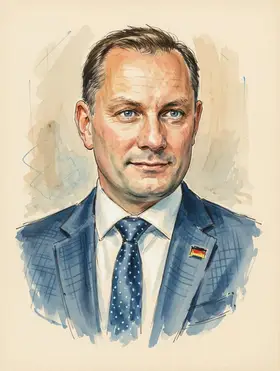
Tino Chrupalla on Björn Höcke
TL;DR
Tino Chrupalla has focused on projecting party unity, sharing stages with and ultimately supporting the influence of Björn Höcke.
Key Points
The party co-leader appeared arm-in-arm with Höcke at an event in Erfurt, marking their first solo joint appearance in late April.
Earlier in his career, Höcke was the subject of internal party attempts to expel him, which eventually dissipated following alliances within the leadership.
Chrupalla focuses on positioning the AfD as a mainstream conservative force, a strategy that necessitates integrating the popular eastern faction leader's base.
Summary
Tino Chrupalla's public stance regarding Björn Höcke has been characterized by a pragmatic move toward unity within the Alternative for Germany (AfD) party, despite Höcke's known status as the figurehead for the party's radical right-wing faction. Chrupalla, as co-leader, has engaged in joint appearances, signaling a public consolidation of the party leadership, even after earlier internal divisions existed over Höcke’s extremism. This approach facilitated the rise of the party, particularly in eastern German states, where Höcke commands significant support.
This alignment is crucial as Höcke's influence has made him, as some commentators suggest, the "real boss" of the AfD, with his faction shaping the party's direction. While Chrupalla himself has not publicly endorsed Höcke's most controversial revisionist statements on history, his choice to share the stage and maintain a non-aggression pact, which evolved into mutual support, effectively validates Höcke's position within the party structure necessary for electoral success.
Frequently Asked Questions
Tino Chrupalla's current stance appears pragmatic, emphasizing party unity by sharing leadership platforms with Björn Höcke. He has not publicly distanced himself from Höcke, which effectively signals an acceptance of the radical faction leader's influence within the AfD's national strategy.
Yes, there were internal struggles in the AfD where figures, including Weidel who later allied with Höcke, sought to remove him due to his extremism. However, the leadership dynamic evolved into a non-aggression pact, ultimately resulting in mutual support between Chrupalla and Höcke.
The party co-chair has managed the far-right wing primarily through strategic unification, highlighted by public appearances together, thereby leveraging Höcke's strength in eastern Germany for broader party growth. This has led to the normalization of the party's more radical elements.
Sources5
Germany elections: In Saxony, the far-right AfD wields power | News ...
Germany's Toxic Far Right | Internationale Politik Quarterly
What is the Alternative for Germany or AfD Party? | AJC
The trial of Björn Höcke, the 'real boss' of Germany's far right
Normalization on the Extreme Right: Alternative for Germany Party Again Gaining Ground
* This is not an exhaustive list of sources.