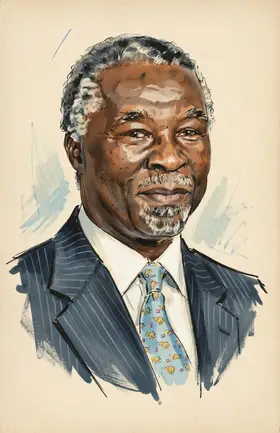
Thabo Mbeki on DRC Conflict
TL;DR
Thabo Mbeki strongly advocates for an inclusive, negotiated peace in the DRC, stressing that military solutions alone are insufficient to end the conflict.
Key Points
He stated that peace and security in the Congo cannot be discussed without involving the M23 group, as doing so is like 'joking'.
His efforts, through the Thabo Mbeki Foundation, aim to advance inclusive dialogue, learning from the precedent set by the Sun City Agreement of 2002.
He asserts that excluding key actors, like the M23 or former President Joseph Kabila, undermines the credibility and durability of any potential peace deal.
Summary
Thabo Mbeki's core position on the conflict in the Democratic Republic of Congo (DRC) is that a sustainable solution cannot be imposed by military force but must emerge from a comprehensive, inclusive dialogue that involves all primary stakeholders. He draws heavily on the lessons from his mediation of the Inter-Congolese Dialogue (IDC) at Sun City (2001-2003), which resulted in a transitional government and a constitution, demonstrating the potential of broad negotiation. His current stance, often articulated through the Thabo Mbeki Foundation’s Peace and Security Talks, insists that excluding key actors, such as the M23 rebels or politically influential figures like former President Joseph Kabila, renders any peace process inherently fragile and illegitimate. This evidence points to a consistent belief that addressing root causes, including identity politics and marginalisation, is paramount.
This position has significant implications for regional and international engagement, positioning him as a proponent of African-led solutions that prioritise political settlements over protracted military interventions, which he views as repeatedly failing to secure lasting peace. The current government in Kinshasa has, at times, resisted this inclusive approach, questioning his neutrality while Mbeki continues to assert that genuine peace requires negotiations among all parties shaping the conflict's dynamics. His approach emphasizes pragmatic political realism: lasting peace depends on the buy-in of all actors, regardless of how controversial they may be.
Frequently Asked Questions
Thabo Mbeki's central position is that the conflict in the DRC cannot be resolved through military means alone, arguing that sustainable peace requires broad, inclusive negotiations. He champions a political solution that addresses the root causes, rather than relying on external military pressure or partial agreements.
He is uncompromising on the necessity of involving all significant actors, including the M23 rebels, in peace talks. Mbeki has stated that discussing peace and security in the Congo without M23 involvement is futile, suggesting their exclusion voids the legitimacy of the process.
Mbeki’s stance appears consistent, rooted in the principles of his earlier mediation work, the Inter-Congolese Dialogue. His continued advocacy for inclusivity, even when facing skepticism from the Kinshasa government, suggests a strong adherence to his established diplomatic methodology.
Sources4
Kabila and Mbeki team up to refocus world's attention on the root causes of the DRC crisis
According to Mbeki, the conflict in the Eastern Congo cannot be solved by military...
Thabo Mbeki And The DRC Conflict: Balancing Inclusion, Neutrality, And Regional Realities - Frontline Africa Advisory
* This is not an exhaustive list of sources.