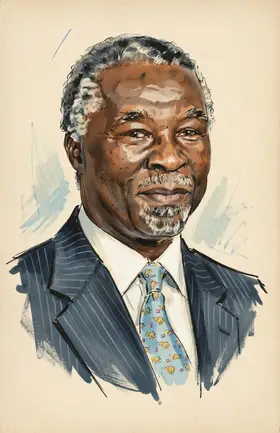
Thabo Mbeki on Legal Issues
TL;DR
Thabo Mbeki generally favoured government action over litigation but was implicated in high-profile legal controversies.
Key Points
He stated in 2003 that the government would not support litigation in U.S. courts against corporations that benefited from apartheid.
His administration's policy on HIV/AIDS treatment led to a 2002 Constitutional Court ruling against the government in the Treatment Action Campaign case.
Defense lawyers in the Charles Taylor trial sought Mbeki's testimony in The Hague in 2010 regarding the circumstances of Taylor's 2003 resignation from Liberia.
Summary
Thabo Mbeki's public position on legal issues was often framed by his administration's preference for executive solutions over judicial intervention, particularly in politically sensitive matters. Evidence suggests he opposed certain types of litigation against corporations, such as those related to post-apartheid reparations, stating the government would not be a party to such actions. His tenure was marked by legal scrutiny, most notably concerning the arms deal, where his deputy, Jacob Zuma, sought to use Mbeki's alleged role to secure a stay of prosecution. Mbeki also faced controversy regarding his administration's policy on HIV/AIDS treatment, which led to a landmark case requiring the state to provide the drug Nevirapine to prevent mother-to-child transmission.
The implications of these legal engagements were significant; for instance, the Nicholson judgment, which struck down the indictment against Jacob Zuma, was seen as a precipitating factor in Mbeki's eventual recall as president. Furthermore, Mbeki's stance on HIV treatment, which echoed 'AIDS denialism,' placed his government in direct legal conflict with activist groups like the Treatment Action Campaign. Later, as a former president, Mbeki's testimony was sought by defense lawyers in international war crimes trials, indicating his actions and policy decisions during his presidency remained relevant in subsequent legal proceedings.
Frequently Asked Questions
Thabo Mbeki took a clear stance against certain litigation, specifically stating in April 2003 that his government would not be a party to lawsuits in U.S. courts seeking reparations from corporations that had benefitted from the apartheid system.
The Mbeki administration was legally challenged over its policy concerning the provision of Nevirapine for preventing mother-to-child HIV transmission, which culminated in a successful 2002 Constitutional Court ruling against the state. Furthermore, his administration faced scrutiny over the arms deal corruption case that implicated his Deputy President, Jacob Zuma.
Yes, as a former president, defense lawyers for Charles Taylor requested that Thabo Mbeki testify in The Hague in 2010 concerning the pressure allegedly placed on Taylor to step down as Liberian president in 2003.
Sources5
Mbeki opposes corporate apartheid lawsuits - Business and Human ...
NPA on steps to investigate and prosecute cases stemming from Truth and Reconciliation Commission | South African Government
legalbrief.co.za
Defense Lawyers Want Former South African President Thabo Mbeki To Testify In The Hague – International Justice Monitor
The Right to Health and the Nevirapine Case in... : New England Journal of Medicine
* This is not an exhaustive list of sources.