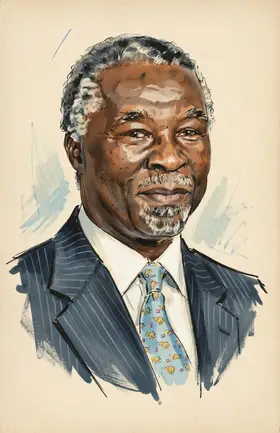
Thabo Mbeki on Arms Deal
TL;DR
Thabo Mbeki maintained that the 1999 Arms Deal was rational and above board, insisting no evidence of bribery was ever found.
Key Points
He testified in 2014 that there was absolutely no evidence of bribery in the acquisition process, despite allegations filling books.
The former president maintained that the government thought the deal's decision was rational and that costs were always a consideration, despite an affordability report detailing risks.
He was alleged in the De Lille dossier to have influenced the tender process by having Ferrostaal and ThyssenKrupp added to the shortlist after a visit to Germany while Deputy President.
Summary
Thabo Mbeki, while Deputy President and later President, defended the integrity of the controversial 1999 Strategic Defence Package, testifying before the Arms Procurement Commission that the decision to proceed was rational and necessary to reclaim the defense force post-apartheid. He consistently insisted that despite numerous allegations and investigations over the years, absolutely no concrete evidence of bribery among the officials involved in the acquisition process was ever produced. The former president headed the cabinet sub-committee that oversaw the deal and maintained that governmental decisions were collective, denying suggestions that individual ministers disregarded costs during consideration. He acknowledged the affordability report existed but stated the government believed it could manage the associated risks.
Despite Mbeki's insistence on procedural correctness, he faced questions regarding allegations of political interference, such as his alleged role in excluding the Special Investigating Unit from a joint probe into the deal, which he denied. Critics, however, argue that he must carry political responsibility for the deal's negative impact on South African politics. While he was implicated in some allegations, notably concerning ThyssenKrupp and Ferrostaal supplier selection, Mbeki strongly rejected these claims, pointing to multiple concluded investigations that failed to substantiate corruption charges against high-level officials.
Key Quotes
“There is absolutely no evidence of bribery in terms of people involved in the processing of the acquisition,”
“Over the years you've seen a lot of comments which seem to attribute particular actions, government actions, to individuals, which is not how our government functions,”
Frequently Asked Questions
Thabo Mbeki's position is that the 1999 Arms Deal was procedurally sound and rational for the post-apartheid era. He has consistently defended the integrity of the decision-making process by asserting that multiple official investigations failed to find concrete evidence of high-level corruption or bribery.
Yes, the former president testified before the Seriti Commission of Inquiry into the Arms Deal. During his testimony, he maintained that no evidence of bribery had been found to date, despite widespread allegations over the years. He stressed that government decisions were collective and not made by individuals acting in personal capacities.
Yes, Thabo Mbeki was implicated in allegations, including claims that he influenced the selection of German bidders after a visit to Germany. Critics also hold him politically accountable for the deal's negative impact on South African life. However, he denied any personal involvement in impropriety.