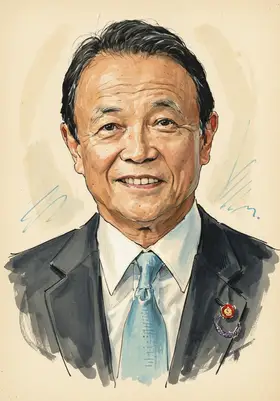
Taro Aso on Public Gaffes
TL;DR
Taro Aso is frequently associated with public gaffes, often leading to government corrections or clarifications after his remarks.
Key Points
His Cabinet members were frequently involved in scandals or were the source of inflammatory gaffes around the July 2007 Upper House election.
His refusal to step down after the July 2007 election, despite poor polling, further irritated voters amidst the ongoing issue of gaffes.
A statement in July 2021 regarding coming to Taiwan's aid in an invasion was noted as a gaffe that might have been deliberate.
Summary
Taro Aso has gained notoriety due to a history of public gaffes, which often require subsequent clarification or denial from the government. This pattern has led to him being known for remarks that are either ill-advised or controversial upon utterance. His statements have occasionally caused internal debate or diplomatic ripples, such as one instance in 2017 regarding Nazi comparisons, which drew significant negative attention.
Despite the pattern, some analysts have suggested that certain high-profile remarks might be deliberate political maneuvers rather than simple slips of the tongue, particularly concerning foreign policy. Nevertheless, the persistent nature of these incidents means that his public statements are often scrutinized for potential missteps, and the government is frequently put in the position of having to address or walk back his comments.
Key Quotes
To be sure, Deputy Defense Minister Aso is known for his public gaffes, which are often corrected or denied by the government after being uttered.
Frequently Asked Questions
Taro Aso does not appear to have a formal position or policy on public gaffes, as he is more often the subject of them. His history suggests that his own controversial or mistaken remarks frequently necessitate a response from the government or party leadership.
There is no clear evidence of Taro Aso publicly evolving a stance on gaffes as a concept, but the nature of his controversial remarks appears to be an ongoing feature of his political career. Some gaffes have been attributed to simple error while others have been speculated to be deliberate.
Following a significant election loss in July 2007, Prime Minister Abe (a contemporary/colleague) pledged to replace his Cabinet, many of whose members had been involved in scandals or were the source of inflammatory gaffes. This indicates that gaffes by his associates were a recognized political issue at that time.
Sources3
Taro Aso: Japan’s finance chief made Nazi comparison
How far would Japan really go to defend Taiwan?
Experts doubt Abe can pull out of political spiral - The Japan Times
* This is not an exhaustive list of sources.