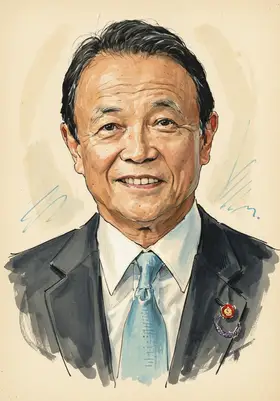
TL;DR
Taro Aso adopts a firm stance on regional security, viewing instability around Taiwan as an existential crisis for Japan.
Key Points
In January 2024, he stated that Japan might invoke collective self-defense if a conflict erupted in the Taiwan Strait.
He referred to Taiwan as an important “country” for Japan during remarks at an event in Tokyo in October 2024.
During a 2009 visit, he affirmed Japan's stance of facing history while seeking forward-looking cooperation with his Chinese counterpart.
Summary
Taro Aso, a leading figure in Japan's ruling Liberal Democratic Party, maintains a notably hawkish stance regarding security issues concerning China, particularly in relation to Taiwan. His position is characterized by vocal support for Taipei and a clear articulation that conflict in the Taiwan Strait would constitute an existential crisis for Japan, potentially justifying collective self-defense. This stance often draws sharp criticism from Beijing, which views such statements as provocative intervention. The former Prime Minister has been direct in asserting that Japan must be prepared for conflict, even if it means risking diplomatic friction with China.
His engagement on this topic has included high-profile visits and statements that challenge the delicate diplomatic balancing act Tokyo usually maintains. When criticized by Chinese entities for his remarks, he has generally dismissed the backlash, suggesting that such criticism is manageable and not a major issue. This approach underscores a belief that security preparedness against potential Chinese assertiveness overrides concerns about immediate diplomatic fallout with Beijing.
Frequently Asked Questions
Taro Aso's current position is strongly focused on security readiness, particularly regarding Taiwan, which he views as an existential crisis for Japan. He advocates for robust deterrence against potential aggression in the region, which often leads to strained relations with Beijing.
While maintaining a consistent interest in strong East Asian economic ties, his more recent statements, especially concerning Taiwan, signal a more overtly hawkish stance on security than may have been publicly emphasized during his time as Prime Minister. He seems more willing to risk diplomatic heat now as a senior party adviser.
When his comments on Taiwan drew strong condemnation from China, Taro Aso publicly downplayed the situation, stating that the criticism from Beijing was “not a big deal.” He asserted that the issue had not escalated into a major problem.
Sources4
Japan's Aso: China's criticism of Taiwan remarks “not a big deal”
Former PM Taro Aso calls Taiwan a 'country' — much to China's chagrin
Chinese Premier Wen Jiabao Holds Talks with His Japanese Counterpart Taro Aso at the Great Hall of the People
52 Japanese Prime Minister Taro Aso Visits China Stock Photos
* This is not an exhaustive list of sources.