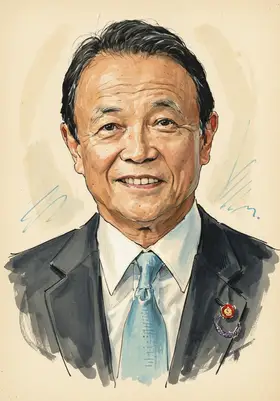
Taro Aso on Cabinet Positions
TL;DR
Taro Aso operates as a long-standing kingmaker who retains significant, behind-the-scenes influence over cabinet appointments.
Key Points
He was instrumental in the power dynamics surrounding the potential snap election announcement around 2019.
His political faction retains significant internal influence which directly translates into leverage over cabinet selection.
Aso maintained a prominent, though perhaps less visible, role in shaping the administration after his time as Prime Minister.
Summary
Taro Aso’s position regarding Cabinet Positions is characterized by his sustained influence as a power broker within the ruling political party, often leveraging his history as a former Prime Minister and his current role as a party leader to shape ministerial lineups. His actions and associations, particularly concerning cabinet reshuffles, are frequently analyzed as demonstrations of his continuing sway over the composition of government, regardless of his formal title at the time. He is widely regarded as a key figure whose tacit approval or opposition can significantly impact who is appointed to key government roles.
This enduring influence stems from his institutional knowledge, factional ties, and strategic political maneuvering over several decades. The composition of cabinets in Japan, particularly under the administration he strongly supported, has often reflected the need to balance internal party factions and reward loyalists, a process where Aso's perspective carries considerable weight. His perceived ability to orchestrate political outcomes makes scrutiny of his involvement essential for understanding domestic policy direction and internal party dynamics.
Key Quotes
"We feel that these change were needed to make for a proper Cabinet"
Frequently Asked Questions
Taro Aso is widely viewed as an influential power broker within the ruling party, meaning his support or opposition can significantly impact who is selected for Cabinet Positions. He leverages his status as a former Prime Minister and senior party figure to maintain this sway.
There is no clear evidence suggesting Taro Aso has fundamentally changed his underlying view on the importance of controlling cabinet appointments for political leverage. His focus has shifted from being the appointee to being the influencer of appointments.
While specific direct statements on recent reshuffles might be infrequent, the analysis of Japanese politics consistently points to his behind-the-scenes influence on ministerial movements. His political alignment heavily suggests an active, though discreet, role in the process.
Sources9
Taro Aso: The Rise of a Power Broker
Snap Election or No Snap Election, That Is the Question
Japan's cabinet reshuffle: Domestic policy gets priority
Japan's Cabinet Reshuffle: US Version
Japan's new security balancing: Tradition and reality
Cabinet reshuffle looms
Japan's New Chapter: The Birth of a Takaichi Administration
Who will be the next Japanese Prime Minister? Daniel Smith, Political Science, on Sanae Takaichi
Japan Prime Minister Takaichi not thinking of cabinet reshuffle
* This is not an exhaustive list of sources.