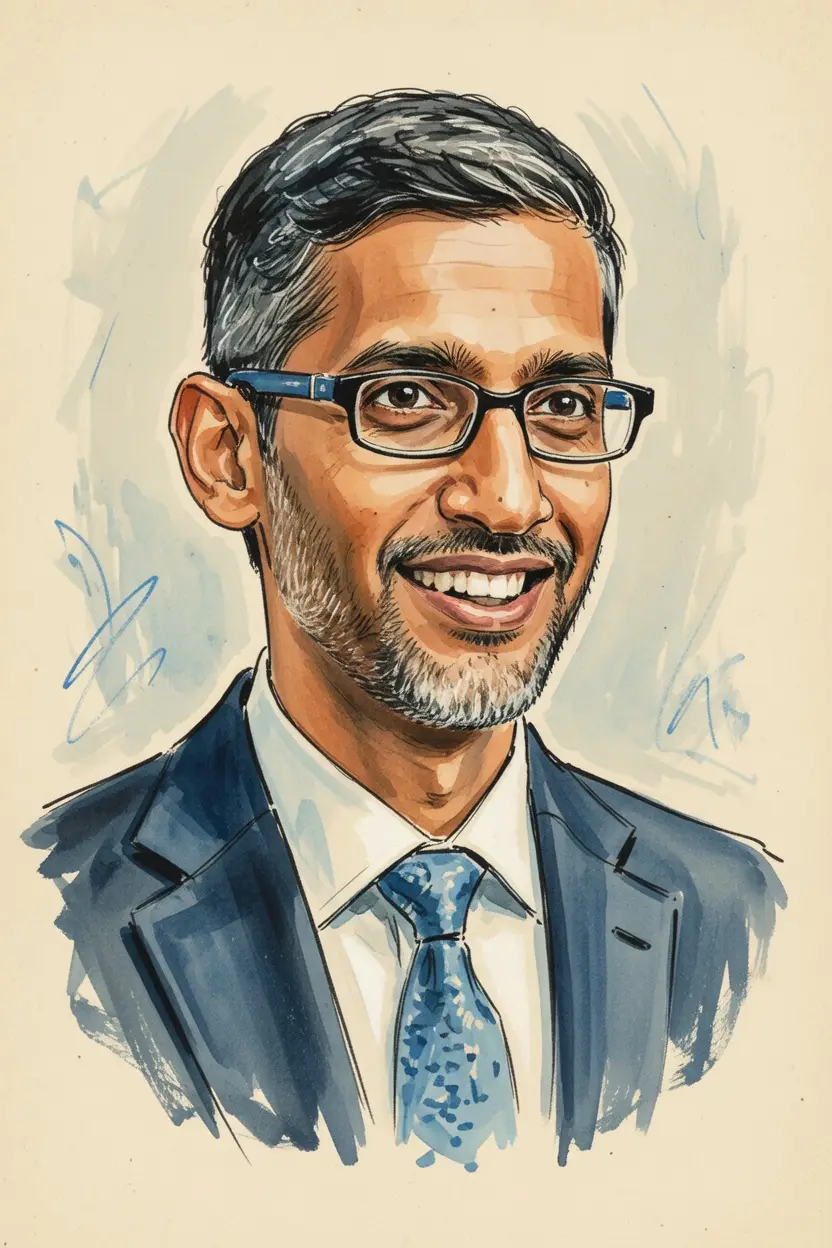
Sundar Pichai on ChatGPT
TL;DR
Sundar Pichai credits OpenAI for launching ChatGPT first but asserts Google had superior underlying AI technology ready.
Key Points
He credited OpenAI for being the first to launch a public, accessible chatbot in 2022.
He asserted that Google was developing similar technology but withheld it because it had too many errors and risks for public release at that time.
He highlighted Google's strategy as a 'full-stack approach' encompassing infrastructure, custom chips, and research teams prior to the generative AI boom.
Summary
Sundar Pichai, CEO of Google, acknowledged that OpenAI released ChatGPT first in late 2022, a move he suggested caught competitors off guard and shifted the public's perception of the AI race. He stated that while Google had been developing a similar chatbot internally, the technology was not yet at a level deemed acceptable for a public release by the company. Despite the perception of being behind, he explained that Google was executing a comprehensive, 'full-stack approach' to AI, investing across infrastructure, custom chips, and world-class research teams before a public launch.
He characterized his internal reaction to the ChatGPT launch not as frustration but as excitement, viewing it as a signal that the moment for broader AI deployment had arrived. He emphasized that Google's long-term foundational work, including advancements like Gemini 3.0, positioned them strongly to compete following the market shift. The CEO noted that Google was prepared to launch its own product months later but held back due to perceived product risks and issues, contrasting with OpenAI’s quicker public rollout.
Frequently Asked Questions
Sundar Pichai's position is one of pragmatic competition; he credits OpenAI for being first to market with ChatGPT. However, he maintains that Google possessed the deeper, foundational technology but prioritized ensuring its public products met a high quality standard before release.
He acknowledged that from an outsider's perspective, Google appeared quiet or behind following ChatGPT's launch. The CEO explained this was due to internal foundational work—the 'building blocks'—that was not yet ready for public execution.
The CEO revealed that Google was working on an internal version of a chatbot well before ChatGPT's debut. He felt this internal version was not yet at the level where Google would be comfortable releasing it to the public.
Sources8
What Does Google CEO Sundar Pichai Really Think of OpenAI
Google CEO Sundar Pichai on why everyone thought Google was 'way behind' ChatGPT in AI race
"We Were Working On Chatbot Too": Sundar Pichai On Google's Missed AI Moment
Sundar Pichai on Google Getting Beat to Market by OpenAI With ChatGPT
ChatGPT becoming synonymous with AI, Google
ChatGPT becoming synonymous with AI, Google
Hard Fork: Sundar Pichai on Google's AI strategy
Google CEO Sundar Pichai Shares
* This is not an exhaustive list of sources.