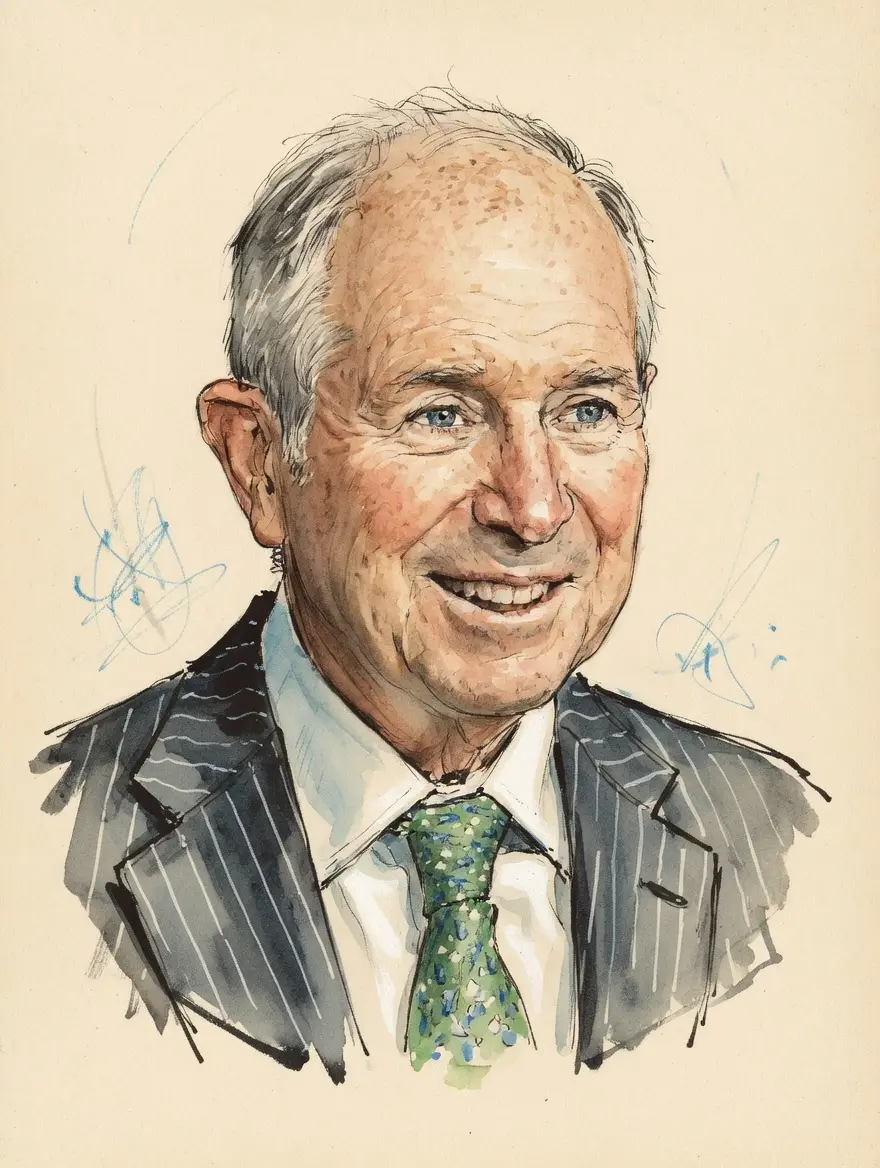
Steve Schwarzman on Carried Interest
TL;DR
Steve Schwarzman views carried interest as historically proper compensation for long-term investment risk, not ordinary income.
Key Points
He stated that carried interest has been treated as a capital gains item for tax purposes since before he entered the industry, implying its historical precedent.
He describes carried interest as a 20% share of investment profits over a hurdle rate, which requires the general partners to invest significant monies in the funds.
He highlighted that fund managers must sometimes repay carried interest if the fund's overall performance does not meet a minimum return threshold.
Summary
Steve Schwarzman defends the taxation of carried interest at capital gains rates, a practice that has existed since before his career began, arguing that it is fundamentally different from ordinary compensation because it is contingent upon the overall performance of the fund's portfolio companies. He contends that opponents mischaracterize the income as being solely for services rendered, ignoring that general partners must invest significant capital and face the risk of losses, for which limited partners bear the primary burden. He notes that partners must often pay back carried interest if the fund ultimately underperforms a hurdle rate, a condition that generally does not apply to ordinary compensation earners. He argues that the current treatment reflects the capital risk assumed, likening it to normal entrepreneurial risk that the tax code has historically favored with lower rates.
The context of the debate, as he presented it, is a political one where opponents seek to characterize his earnings as simply ordinary compensation. He points out that in his firm's structure, the general partner's share of profit is contingent upon achieving a minimum return, typically around 8%, and that if the income were treated as ordinary income, it would distort the economics of the partnership arrangement. The framework under which he operates, where fund managers receive a share of profits after investors meet a hurdle rate, has been the long-standing method for compensating working partners in an investment partnership.
Frequently Asked Questions
Steve Schwarzman's position is that carried interest should continue to be taxed at the favorable capital gains rate. He defends this by asserting that the income represents compensation for long-term investment risk and committed capital, rather than being merely ordinary compensation for services.
He justifies it by explaining that carried interest is contingent on the fund's overall profit above a hurdle rate, meaning general partners face the risk of earning nothing or even having to return profits. He argues this structure is different from ordinary compensation, which is not subject to the same performance contingencies or capital risk.
Yes, Steve Schwarzman later apologized for a statement he made in 2010 where he compared the Obama administration's plan to raise the tax rate on carried interest to Hitler's invasion of Poland. This indicates a recognition of the analogy's inappropriateness.
Sources7
Stephen A. Schwarzman - Wikipedia
ECON 252 - Open Yale Courses: ECON 252 Financial Markets: Lecture 20 Transcript
Recasting Carried Interest: An Examination of Recent Tax Reform Proposals
How the Carried Interest Loophole Makes the Super-Rich Super-Richer
How the Trump Oligarchy Works: The Case of Stephen Schwarzman
Here's How Steve Schwarzman Gets Paid | by Will Alden | Medium
THE CURIOUSER AND CURIOUSER CASE OF CARRIED INTERESTS
* This is not an exhaustive list of sources.