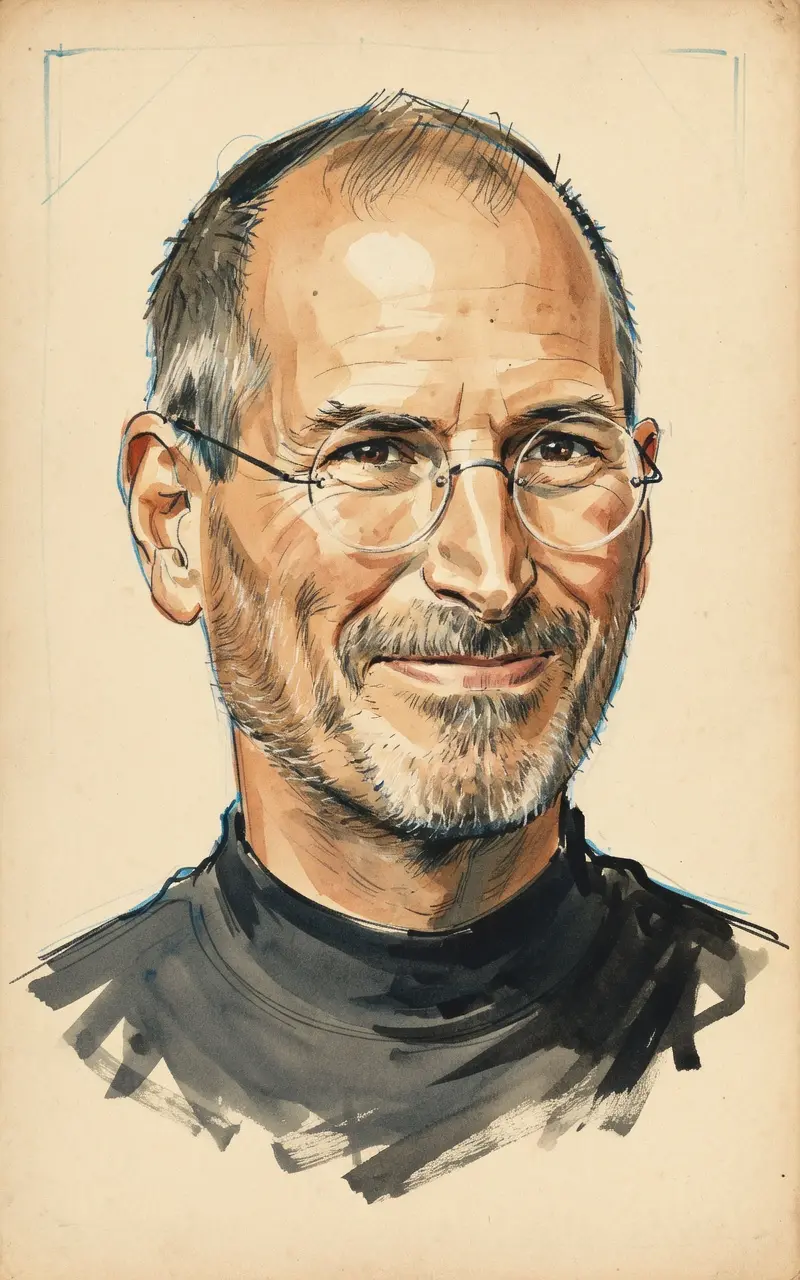
Steve Jobs on Change
TL;DR
Steve Jobs viewed profound, often uncomfortable, change as the essential catalyst for innovation, life progression, and true fulfillment.
Key Points
He maintained that individuals must be "crazy enough to think they could change the world" to actually accomplish it.
He stated that death is likely the single best invention of life, serving as life's essential change agent.
The idea of connecting the dots only becomes possible when looking backward at previous, seemingly unrelated changes.
Summary
Steve Jobs fundamentally believed that significant, disruptive change was not merely inevitable but was the necessary force behind progress, both in technology and in personal life. He consistently advocated for a willingness to pivot, to challenge the status quo, and to seek out experiences that would fundamentally alter one's path, often citing his own unplanned detours as crucial to his success. The subject argued that the ability to look back on life and connect the dots only happens in retrospect, emphasizing that pursuing one's passion without a clear map is essential for creating something truly world-changing.
This perspective on constant evolution extended to his view on mortality, which he framed as life's most significant change agent. He saw death as clearing out the old to make room for the new, a concept he applied to both the individual and the marketplace. This acceptance of impermanence fueled his urgency to innovate radically and avoid the inertia of complacency, positioning him as a proponent of bold moves rather than incremental adjustments.
Key Quotes
"Everything around you that you call life, was made up by people who were no smarter than you. And you can change it. And you can influence it. You can build your own things that other people can use. And the minute that you understand that you can poke life, that if you push in, something will pop out the other side. That you can change it. That you can mold it. That's maybe the most important thing."
Here's to the crazy ones — the misfits, the rebels, the troublemakers, the round pegs in the square holes. The ones who see things differently — they're not fond of rules. You can quote them, disagree with them, glorify or vilify them, but the only thing you can't do is ignore them because they change things. They push the human race forward, and while some may see them as the crazy ones, we see genius, because the ones who are crazy enough to think that they can change the world, are the ones who do.
Frequently Asked Questions
Steve Jobs generally viewed significant change as a powerful and positive force for both personal and technological advancement. He believed that major disruptions were necessary to clear out the old and make way for truly innovative new creations.
Jobs frequently connected profound life changes, like being fired from his own company, to unexpected opportunities for growth. He felt that trusting one's intuition through these shifts allows one to connect the dots later.
Yes, he viewed change as a continuous necessity, most profoundly exemplified by his belief that death itself is life's greatest agent of change. This served as a motivator for urgency and focus.
Sources7
Steve Jobs: You can’t connect the dots looking forward; you can only connect them looking backwards. So you have to trust that the dots will somehow connect in your future. You have to trust in something — your gut, destiny, life, karma, whatever. This approach has never let me down, and it has made all the difference in my life.
The 9 Lessons from Steve Jobs: How to Change the World
Steve Jobs: Death Is Very Likely the Single Best Invention of Life. It is Life’s Change Agent. It Clears Out the Old to Make Way for the New.
Steve Jobs on Life, Failure, and the Magic of Staying Hungry and Foolish
25 Wise and Inspiring Steve Jobs Quotes That’ll Make You Want to Change the World
Steve Jobs: Crazy Enough to Think He Could Change the World, and Did
Steve Jobs: You Can't Connect The Dots Looking Forward. You Can Only Connect Them Looking Backwards. So You Have to Trust That The Dots Will Somehow Connect In Your Future. You Have To Trust In Something — Your Gut, Destiny, Life, Karma, Whatever. This Approach Has Never Let Me Down, And It Has Made All The Difference In My Life.
* This is not an exhaustive list of sources.