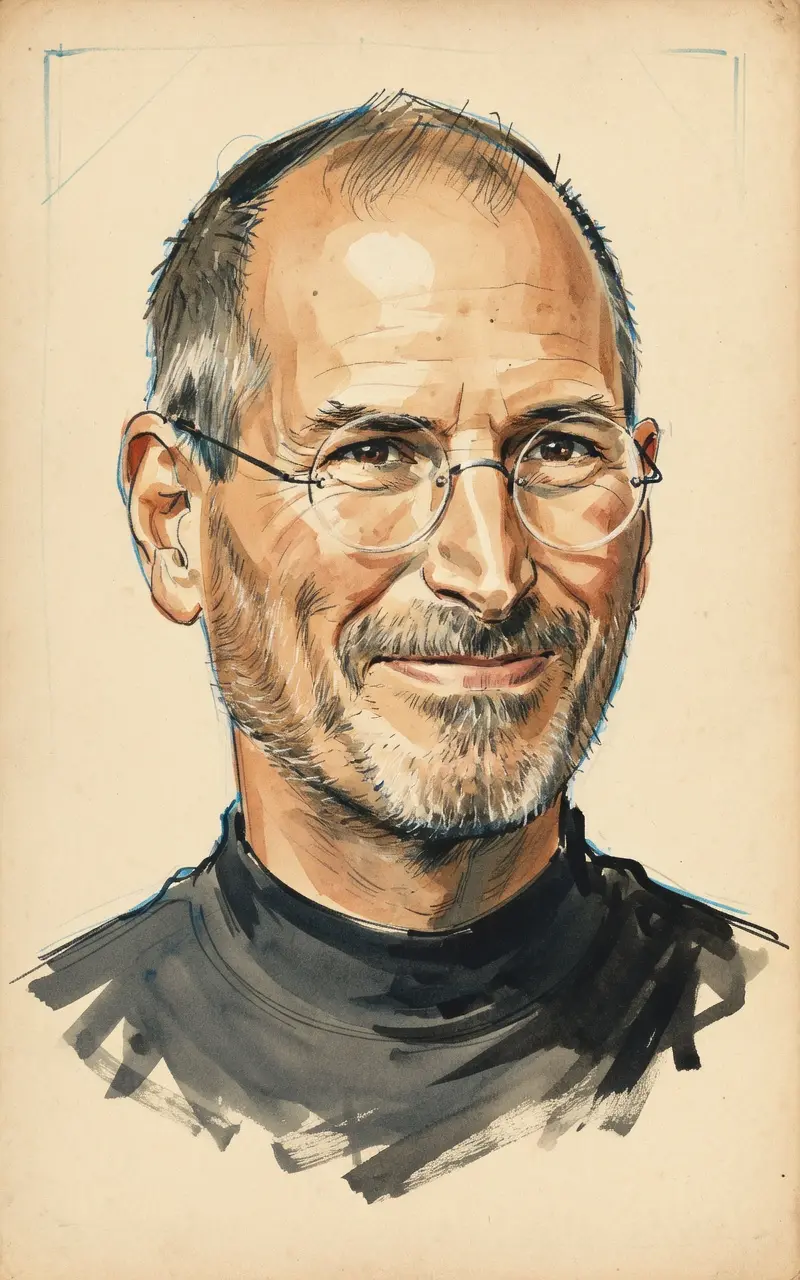
Steve Jobs
- Known for
- Co-founding Apple, Personal computer revolution, Product design aesthetic
- Born in
- San Francisco, USA
- Education
- Stanford University
Steve Jobs was the archetypal visionary behind the personal computer revolution, defining the intersection of technology and design. His worldview centered on relentless innovation, aesthetic perfection, and a near-obsessive focus on delivering products that revolutionized entire industries.
Signature Positions
Jobs's career was defined by his leadership and product philosophy across multiple ventures:
- Apple: Co-founded and later resurrected the company, driving key product introductions like the iMac, iPod, iPhone, and iPad.
- Design: Insisted on simplicity and aesthetic beauty, often driven by Zen Buddhism principles, famously stating, "real artists ship."
- NeXT: Founded a computer platform company focused on high-end workstations for academia, which ultimately provided the technology backbone for Mac OS X.
- Pixar: Purchased and led the animation studio, overseeing hits like Toy Story and transforming it into a major creative force before its sale to Disney.
- Marketing: Mastered persuasion through his presentations, often leveraging what was termed the "reality distortion field" to sell his vision.
How Views Have Evolved
Jobs’s early career was marked by clashes and being ousted from Apple in 1985. His subsequent time at NeXT and Pixar demonstrated a necessary maturation.
While his early Apple tenure showed rebellious youth and clashes with leadership (John Sculley), his return in 1997 showed a more strategic, albeit still demanding, leader focused on focus and profitability.
Notable Tensions
Jobs’s public persona contained notable contradictions:
- Philanthropy: Despite immense wealth and influence, he was criticized for a notable absence of large-scale philanthropy, declining to sign The Giving Pledge.
- Fatherhood: Publicly denied paternity of his first daughter, Lisa Brennan-Jobs, while simultaneously planning a computer named Lisa, later admitting the connection.
- Leadership Style: Admired for his vision and attention to product detail, he was also perceived as a demanding perfectionist who often used abrasive management tactics.
Jobs set the agenda for the personal technology industry, often positioning Apple against rivals like Microsoft (led by Bill Gates). His commitment to proprietary, closed architecture systems contrasted sharply with the open-platform approaches dominant at the time. His legacy rests on integrating creativity and technology into seamless consumer experiences.