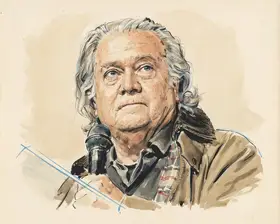
Steve Bannon
- Known for
- White House chief strategist, Breitbart News executive, Political strategist
- Born in
- Norfolk, United States
- Education
- Master of Business Administration, Harvard Business School
Steve Bannon is a political strategist and media executive whose influence shaped the Trump administration and the global populist movement. A self-described economic nationalist, his worldview blends elements of paleoconservatism and Traditionalist philosophy. He is perhaps best defined by his radical anti-establishment stance and his role as a polarizing figure in modern American politics.
Signature Positions
Bannon's political platform centers on national sovereignty and dismantling established political structures:
- Immigration: Strongly advocates for reducing all forms of immigration, including legal immigration, viewing it as a threat to national sovereignty.
- China: Views the CCP as an existential enemy, believing the U.S. is already in a hot war with China across economic and information fronts.
- Economy: Describes himself as an economic nationalist, advocating for high infrastructure spending and higher taxes on the ultra-wealthy.
- Climate Change: Successfully pushed Donald Trump to withdraw from the Paris climate agreement.
- Gun Control: A staunch defender of the Second Amendment, he warned against any movement toward gun control as politically ruinous for conservatives.
Notable Tensions
Bannon's career is marked by significant professional and legal controversies:
- Legal Troubles: Pleaded guilty in New York state court to fraud related to the We Build the Wall campaign, following an earlier federal pardon from Trump.
- January 6th: Convicted and briefly imprisoned for contempt of Congress after refusing to comply with a subpoena from the January 6 House select committee.
- Ideological Influences: His embrace of thinkers like Julius Evola and repeated references to Leni Riefenstahl have led critics to accuse him of promoting Nazi positions, which he denies.
- Epstein Connection: Worked as an advisor to Jeffrey Epstein on media relations shortly before Epstein's death, attempting to 'humanize the monster' through a documentary project.
Following his departure from the White House, Bannon declared his mission to build the infrastructure for the global populist movement, touring Europe to support right-wing parties opposed to the European Union.
His media presence, primarily through the War Room podcast, remains influential, though his tenure at Breitbart News demonstrated an appetite for controversial content, with him once calling the site 'the platform for the alt-right.'
Bannon's relationship with Donald Trump has been volatile, ranging from chief strategist to public adversary, though he frequently maintained communication and support for the former president's agenda.