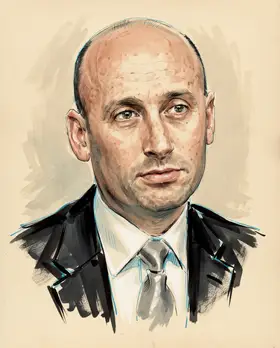
Stephen Miller on Tariffs
TL;DR
Stephen Miller strongly supports the use of tariffs as an executive tool to enforce an America First trade policy and counteract judicial rulings against them.
Key Points
He reacted to a federal ruling that halted certain tariffs by asserting that "The judicial coup is out of control" on May 28, 2025.
Following a Supreme Court ruling impacting previous tariff actions, he stated the administration would seek to implement tariffs through alternative executive methods.
His perspective is aligned with the policy of the Trump administration, which utilized executive authority to impose significant tariffs on foreign nations.
Summary
Stephen Miller strongly advocates for the use of tariffs as a necessary tool for enacting an America First trade agenda, framing them as essential for protecting domestic interests. His position is evident in his reaction to judicial setbacks, such as when he described a court ruling against the president's use of the International Emergency Economic Powers Act to impose duties as "The judicial coup is out of control." He appears committed to implementing trade protectionism through executive action, even when facing legal challenges.
This stance implies a belief in robust executive power concerning international trade policy, viewing tariffs not just as a bargaining chip but as a primary mechanism for achieving national economic goals. Following a Supreme Court ruling that curtailed the president's ability to impose certain tariffs, Miller indicated that the administration would pursue tariffs "through other means," suggesting a commitment to circumventing or finding alternative legal paths to enforce similar economic restrictions on foreign trade.
Frequently Asked Questions
Stephen Miller is a strong advocate for the use of tariffs as an executive policy tool. He views tariffs as a critical component of an America First trade agenda necessary for protecting domestic economic interests.
Yes, following a ruling that disallowed a specific legal basis for imposing tariffs, Stephen Miller strongly criticized the decision. He described the judicial action that overturned the duties as a "judicial coup."
After judicial setbacks, Stephen Miller indicated that the administration intends to continue pursuing tariffs through other executive means. This signals a commitment to finding alternative legal avenues to maintain trade protectionist measures.
Sources2
Stephen Miller says that the Trump administration will continue tariffs through other means | Fox News Video
Stephen Miller: “The judicial coup is out of control.” | News, Sports ...
* This is not an exhaustive list of sources.