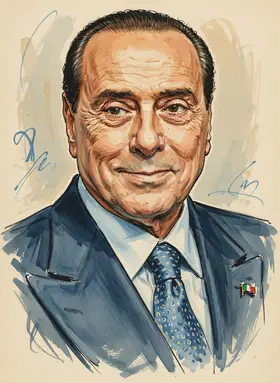
Silvio Berlusconi
- Known for
- Media tycoon, Italian prime minister, Controversial politician
- Born in
- Milan, Italy
- Education
- Graduating with honours in 1961, University of Milan
Silvio Berlusconi was an Italian media tycoon and politician who dominated the center-right for decades, serving as Prime Minister for a record nine years. His career blended immense business success with populist politics, earning him the nickname 'Il Cavaliere'.
Signature Positions
Berlusconi's political platform centered on a 'liberal revolution' and a focus on defeating communism, often utilizing his media empire for political ends:
- Economic Policy: Advocated for tax reduction and a 'Contract with the Italians' program, though critics argue he failed to achieve key goals like halving unemployment.
- Media Control: Maintained ownership of Mediaset while in office, leading to significant criticism regarding conflict of interest and threats to press freedom.
- Foreign Policy: Was a strong US ally, supporting the Iraq War, while maintaining a famously close relationship with Vladimir Putin and Russia.
- Constitutional Reform: Pushed for a shift toward a presidential republic and devolution of power to regions, which was ultimately rejected by referendum.
Notable Tensions
Berlusconi's legacy is defined by deep controversy and legal battles:
- Judicial Conflicts: He was repeatedly accused of using his legislative power to pass ad personam laws to delay or dismiss ongoing trials against him.
- Ethics and Scandals: His career was plagued by accusations of tax fraud, sexual misconduct (including the 'Rubygate' affair), and alleged links to the Mafia through associates.
- Populist Style: Known for controversial jokes and blunders regarding women, foreign leaders, and historical events, often defending them as harmless jokes.
- Russia Relations: Despite condemning the 2022 invasion, he later expressed support for Putin and claimed Volodymyr Zelenskyy was responsible for the conflict.
Berlusconi's political style is frequently compared to that of Donald Trump, both figures rising through media empires while facing numerous legal challenges. He effectively legitimized radical-right parties like Lega Nord and Brothers of Italy by incorporating them into his center-right coalitions.