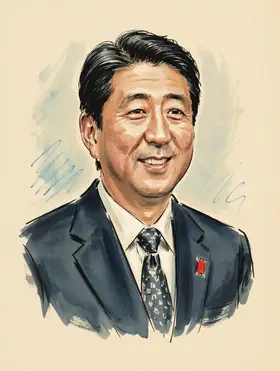
Shinzō Abe on World War 2
TL;DR
Shinzō Abe advocated for a forward-looking Japan while seeking to revise the national narrative regarding wartime aggression and guilt.
Key Points
He sought to shift Japan's narrative away from perpetual apology toward a more future-oriented perspective on its wartime past.
His discourse on Sino-Japanese relations reflected a desire to take Japan back, implying a re-evaluation of post-war guilt associated with World War 2.
Controversies surrounding his stance often centered on attempts to revise historical narratives presented in Japanese educational materials.
Summary
Shinzō Abe’s position regarding World War 2 centered on promoting a more nationalist view of Japan's wartime history, often emphasizing national pride and post-war recovery over explicit, repeated apologies for historical actions. He frequently sought to revise the historical narrative presented in textbooks, attempting to downplay or contextualize actions taken by the Imperial Japanese Army during the conflict. This stance often put him at odds with neighboring countries, particularly China and South Korea, who demanded clearer acknowledgments of past atrocities and war guilt. His political actions and statements reflected a conservative desire to move beyond what he perceived as a cycle of perpetual apology.
This desire to shift the historical focus was deeply connected to his broader political agenda of national revitalization and constitutional revision. While his supporters viewed this as a necessary correction to an overly self-critical post-war identity, critics accused him of historical revisionism and an unwillingness to fully confront wartime responsibilities. The context of his political career, marked by aspirations for a stronger Japan, often manifested in his comments concerning the war, creating recurring diplomatic tensions with nations that experienced Japanese occupation and aggression.
Key Quotes
In 2013, during Japanese Prime Minister Shinzō Abe's second term, Abe's cabinet stated that the raids were "incompatible with humanitarianism, which is one of the foundations of international law"
On March 1, 2007, Prime Minister Shinzō Abe stated that there was no evidence that the Japanese government had kept sex slaves
Frequently Asked Questions
Shinzō Abe generally promoted a forward-looking view, aiming to reduce the emphasis on wartime guilt in Japan's national identity. He sought to revise how history was taught, leading to tensions with neighboring countries.
Yes, he reportedly attempted to revise the historical narrative presented in Japanese textbooks regarding the actions of the Japanese Army during the war. This effort was a key element of his nationalist platform.
His efforts to contextualize or downplay past aggression were viewed by critics, particularly in East Asia, as historical revisionism. This created diplomatic friction with nations demanding clearer acknowledgments of wartime actions.
Sources5
Is it true Shinzo Abe tried to erase the horrors that were done by Japanese Army during WW2 from textbooks?
SHINZO ABE'S DISCOURSE ON THE SINO-JAPANESE RELATIONS: TAKE JAPAN BACK AND JAPAN'S WAR GUILT
Why did Japan never apologize enough for World War 2?
Abe might not be aggressive about easing
Kishi Nobusuke’s Controversial Legacy: From War Criminal to Prime Minister
* This is not an exhaustive list of sources.