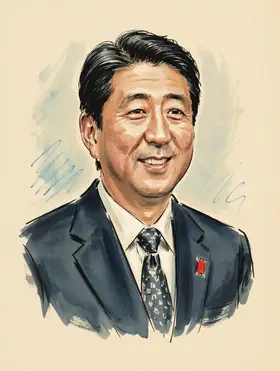
Shinzō Abe on Comfort Women
TL;DR
Shinzō Abe upheld his predecessors' apologies while avoiding a direct, new admission of coercion in the system's establishment.
Key Points
He upheld the views expressed by preceding prime ministers regarding the war's impact on Asian nations.
In April 2015, he offered condolences for war dead to the US Congress but did not specifically name or apologize for comfort women.
His government reportedly formed a team in 2014 to reexamine the background of the 1993 Kono Statement, though he later confirmed no revision would occur.
Summary
Shinzō Abe's core position on the issue of comfort women has been to affirm the apologies issued by previous Japanese prime ministers, most notably the Kono Statement. He has repeatedly stated that he is no different from preceding leaders in feeling pained by the immeasurable suffering experienced by the women. However, his stance has drawn criticism for being perceived as a defense of the official position, which does not always explicitly confirm direct coercion by the Japanese military in the recruitment process, leading to perceived attempts to re-examine or downplay aspects of the historical record. This has been interpreted by critics as a move to align with a conservative historical revisionism, which has fueled diplomatic tensions.
This perceived ambiguity and reluctance to issue new, specific apologies contrasts with the expectations of victims' groups and some international bodies, which have urged Japan to acknowledge responsibility and take further measures. His administration has faced scrutiny for suggesting reviews into the background of the Kono Statement, though he ultimately announced the government would not revise it. The political environment in Japan during his tenure has been described as making objective historical inquiry into the subject less hospitable, leading to diplomatic friction with South Korea.
Key Quotes
On behalf of Japan and the Japanese people, I offer with profound respect my eternal condolences to the souls of all American people that were lost during World War Two
...he is deeply pained when thinking of the comfort women who experienced unmeasurable pain and suffering.
Frequently Asked Questions
Shinzō Abe maintained the official Japanese government position of accepting the apologies made by past prime ministers, such as in the Kono Statement. He stated that he felt deeply pained by the comfort women's suffering, mirroring his predecessors. However, he consistently stopped short of issuing a new, direct apology that would confirm direct military coercion in all cases.
His public position has been characterized by consistency in upholding past government statements rather than a dramatic shift. Critics, however, point to actions by his administration, such as reviewing the background of the Kono Statement, as evidence of a potential move away from previous acknowledgments, though he ultimately decided against revising the statement.
During his 2015 address to the US Congress, Shinzō Abe offered general remorse for suffering in Asian countries during World War Two. He stated that 'what's done cannot be undone' and that he would uphold previous apologies, but he did not use the term 'comfort women' or offer a specific apology for that issue.
Sources8
Japan's PM apologises for US war dead – but fails to mention 'comfort women'
UN / COMFORT WOMEN | UNifeed - Media - the United Nations
Kono Statement - Wikipedia
Some Thoughts Concerning the Issues Surrounding “Comfort Women”
'Comfort women': anger as Japan paper alters description of WWII terms — History News Network
The Justice for “Comfort Women”-Movement remains here and around the world
Standing with Historians of Japan – AHA
Korean comfort women interviewed after whirlwind 1943 Japan tour visiting wounded Imperial Japanese soldiers who 'showed us again and again with their bodies, not with their words, that Japan and Korea were to be unified as one' and 'we were often moved to tears because we did not feel worthy' : r/korea
* This is not an exhaustive list of sources.