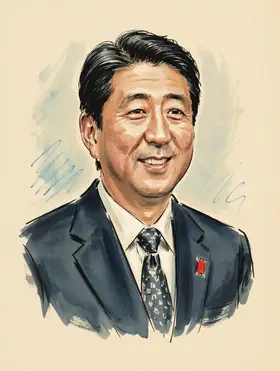
Shinzō Abe
- Known for
- Longest-serving PM, Abenomics, Constitutional revision efforts
- Born in
- Tokyo, Japan
- Education
- Bachelor's degree in political science, University of Southern California
Shinzō Abe was Japan's longest-serving Prime Minister, a defining figure of modern Japanese conservatism and nationalism. Born into a powerful political dynasty, he aimed to restore Japan's global stature and rewrite its post-war pacifist identity. His nearly nine years in power were marked by ambitious economic reform and major shifts in defense policy.
Signature Positions
Abe's political career centered on four key areas:
- Abenomics: His signature economic policy, a strategy of aggressive monetary easing ("three arrows") designed to combat deflation and revitalize growth.
- Constitutional Revision: A staunch conservative, Abe aggressively pursued the revision of Article 9 of the constitution to allow for a more conventional military role.
- Security Policy: He championed "proactive pacifism", culminating in the controversial Legislation for Peace and Security allowing the Japan Self-Defense Forces (JSDF) to defend allies overseas.
- Foreign Relations: Focused on strengthening ties with the US, Australia, and India (founding the Quad) as a strategic counterbalance to the rise of China.
Notable Tensions
Abe’s legacy is highly polarizing due to several inherent conflicts:
- Historical Negationism: His downplaying of wartime atrocities, particularly regarding comfort women, severely strained relations with South Korea and China.
- Media Freedom: He faced accusations of media intimidation and excessive state secrecy, contributing to Japan's sharp decline in press freedom rankings.
- Family Ties vs. Diplomacy: Despite forging alliances with democratic partners, his family's documented ties to the Unification Church became a central issue following his assassination.
Abe was often called the "shadow shogun" for his profound and lasting influence over the Liberal Democratic Party (LDP). He successfully navigated the "Twisted Diet" gridlock to establish unprecedented political stability. Internationally, he is credited with revitalizing the Trans-Pacific Partnership (TPP) into the CPTPP following the US withdrawal.