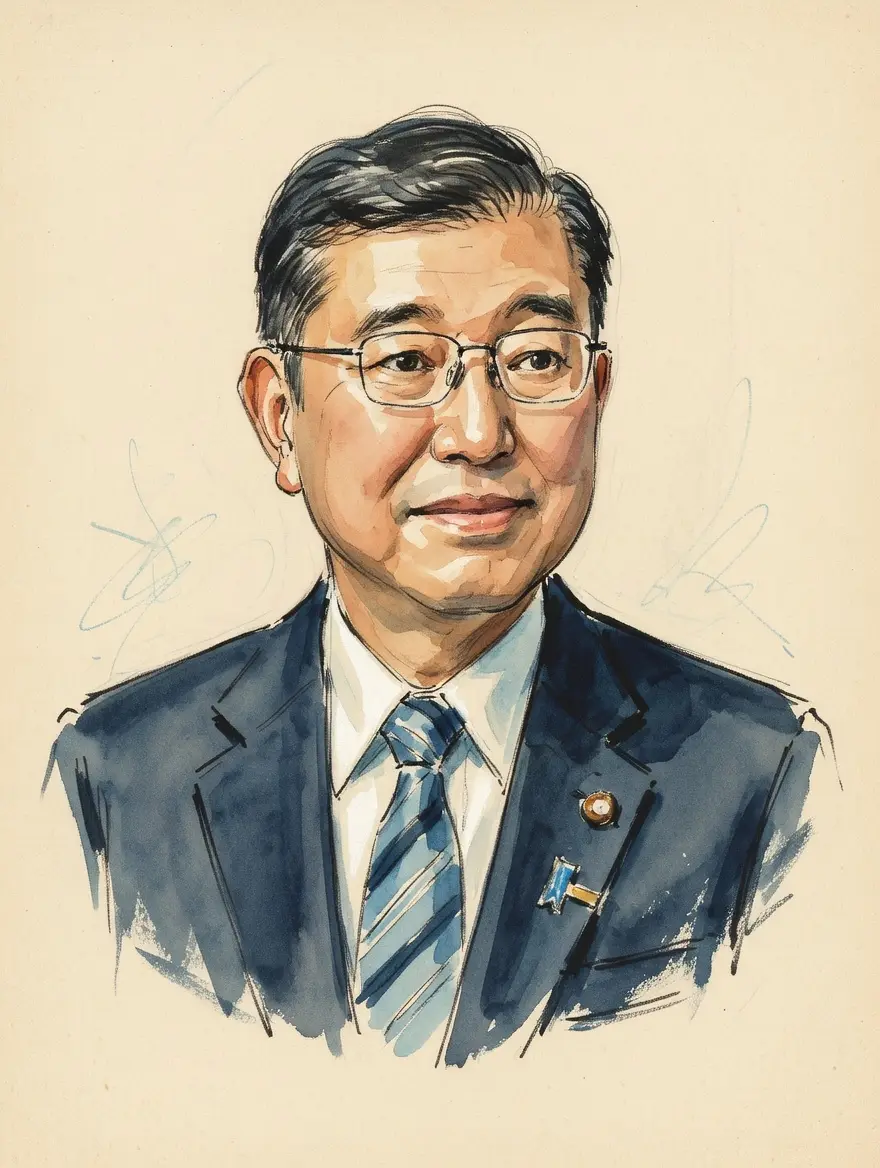
Shigeru Ishiba on Shinzo Abe
TL;DR
Shigeru Ishiba has built a political career as a vocal, consistent critic of the policies and political style of the late Shinzo Abe.
Key Points
He narrowly lost the decisive 2012 leadership race to Shinzo Abe, a loss that paved the way for Abe's long spell in power.
Ishiba publicly stated in 2007 that former Prime Minister Abe needed to explain his reasons for continuing as leader after the ruling coalition lost its majority.
Ishiba's policy view advocating for a more neutral position between Beijing and Washington diverges from the hawkish stance often associated with Abe.
Summary
Shigeru Ishiba has established a political identity largely in opposition to the policies championed by the late Shinzo Abe, marking a distinct separation from the dominant factional line within the ruling party. His opposition notably includes a history of publicly criticizing Abe’s policy directions, a stance that earned him the reputation of a dissident within the Liberal Democratic Party and contributed to his marginalization for years. This fundamental difference in political outlook was highlighted during the 2024 leadership contest, where Ishiba defeated a candidate who represented a return to the Abenomics-era playbook, signaling a split with the past.
Ishiba’s divergence extends to historical issues, where his personal reflection on World War II contrasted with Abe’s official 2015 statement, with Ishiba once expressing doubt that Abe had thoroughly examined the pre-war to post-war developments when addressing collective defense. Furthermore, his policy preferences, such as advocating for a more neutral position between Beijing and Washington and proposing a NATO-style alliance in Asia, contrast with the strong pro-Japan agenda associated with Abe. Analysts note that Ishiba's path represents a potential shift away from the policies that defined Japan's recent history under Abe's influence.
Key Quotes
When Abe announced his intention to stay on, I said, ‘It is necessary to explain why he is staying and to gain not only our members’ understanding but also that of the public.’
I was not confident that Mr. Abe had called for collective defense after fully examining the developments from pre-war to post-war Japan.”
Shinzo Abe thought the world of him, and I think he’s going to do a fantastic job as Prime Minister.
Frequently Asked Questions
Shigeru Ishiba has generally positioned himself as an outsider and critic of the policies enacted during Shinzo Abe's time as prime minister. His political career was largely built upon opposing Abe's orthodoxy within the Liberal Democratic Party. This difference is visible in foreign policy and economic views, such as his critique of Abenomics.
Yes, Ishiba has a documented history of public criticism regarding Abe's decisions. For instance, he previously felt Abe needed to explain why he was continuing as leader after the coalition lost a majority in the 2007 election. He also questioned Abe's handling of collective defense in a 2010 interview.
No, Shigeru Ishiba actively opposed the candidate, Sanae Takaichi, who was seen as a staunch supporter of the policies from the Shinzo Abe era. Ishiba's victory over Takaichi in the runoff was interpreted as a rejection of the recent party orthodoxy championed by Abe's faction.
Sources7
Shigeru Ishiba made his career as an anti-Abe
The President's News Conference With Prime Minister Shigeru Ishiba of Japan
Ishiba's Japan: Navigating diplomacy and security in the post-Abe era
Prime Minister Ishiba criticism of Abe' decision to continue after losing the 2007 House of Councillors election : r/japannews
The Japanese Prime Minister's “Comment” On The WWⅡ: Shigeru Ishiba's Farewell Token
Strategic Shift from PM Abe to PM Ishiba: Will Japan's Strategy Change?
Japan risks drifting under a lame duck prime minister
* This is not an exhaustive list of sources.