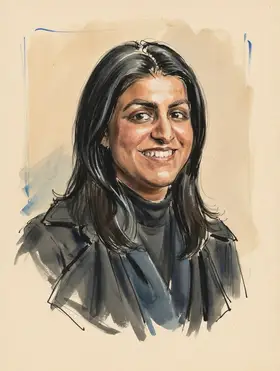
Shabana Mahmood on Her Faith
TL;DR
Shabana Mahmood views her strong Islamic faith as the primary motivation calling her into public service to better the nation.
Key Points
Her Islamic faith is cited as the direct reason she feels called to enter and remain in public service as a politician.
She believes life is a test, motivating her to use the privileges she was gifted to work to change lives for the better.
She actively rejects the notion that being a faithful, devout Muslim makes it impossible for her to serve as Home Secretary.
Summary
Shabana Mahmood explicitly states that her very strong faith has called her into public service, viewing life as a test for which one is accountable to God for their privileges. She feels a deep motivation to use her privileged position, including her education and birth in the UK, to change lives for the better for millions of people. She is an honest reflector of this reality, stating that religiously informed reasons are valid and can be deeply rooted in millennia of reflection on profound realities like compassion and dignity.
Mahmood has spoken out against the idea that her faith invalidates her public policy opinions, arguing that all political values are ultimately rooted in some form of foundational belief. She notes that her Islamic faith shapes her thinking, but she is not seeking to coerce others into following Islam through her political arguments, asserting that she is simply making an argument that others can agree or disagree with. Furthermore, she defends the positive societal role of the majority of Muslims, whose faith calls them to peaceful public service, in contrast to the actions of a vocal minority.
Frequently Asked Questions
Shabana Mahmood has stated clearly that her very strong faith is the reason she feels she was called to public service. She sees her life as a test and feels accountable to God for how she uses the privileges she has been given. This belief is a key source of her resilience in politics.
She believes that religiously informed reasoning is valid and can be a deep source of wisdom for public policy issues. However, she also asserts that she is not trying to coerce non-Muslims into adopting her Islamic beliefs through law. She makes arguments that others are free to agree or disagree with.
She views the majority of Muslims in the country as peaceful citizens whose faith calls them towards a good life and public service. She regrets that the actions of a minority of extremists often overpower this majority narrative.
Sources4
'No racist is going to make me feel I don't belong': Shabana Mahmood on resilience, faith and public service
In Defence of Shabana Mahmood
Home Secretary discusses 'difficult' task of rebuilding trust between British Jews and Muslims
Justice Secretary Shabana Mahmood says Islam is the core of who I am
* This is not an exhaustive list of sources.