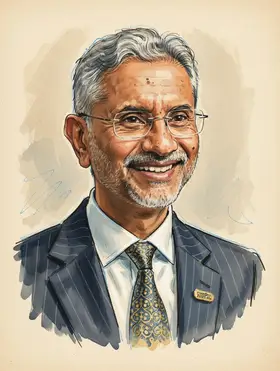
Subrahmanyam Jaishankar on Wang Yi
TL;DR
Subrahmanyam Jaishankar views engagement with Wang Yi as essential for restoring stability and cooperation in India-China ties.
Key Points
He stated that the meeting between the two leaders in Kazan provided crucial guidance for the improvement of India-China bilateral relations as of February 2025.
The Minister expressed gratitude to China for facilitating Indian pilgrims' visits to the sacred mountains and lakes in China's Xizang around August 2025.
In July 2024, he agreed that developing stable and predictable India-China relations serves the interests of both sides and requires constructively resolving specific differences.
Summary
Subrahmanyam Jaishankar, as India's External Affairs Minister, approaches interactions with Wang Yi, his Chinese counterpart, by emphasizing the need to adhere to high-level understandings to improve bilateral relations. He consistently stresses that restoring mutual trust is in the interest of both nations and has appreciated the resumption of exchanges at various levels following the guidance provided by the leaders of both countries, such as the meeting in Kazan. He also highlights that India and China, as major developing countries, must strengthen international cooperation within multilateral forums like the G20, SCO, and BRICS, underlining their shared commitment to multilateralism.
This engagement has involved efforts to manage the complex relationship, often characterized by seeking a strategic vision where both countries view each other as partners rather than rivals. In his discussions, the Minister has worked to ensure that differences, particularly regarding border tranquility, are addressed constructively through established mechanisms, aiming to turn a new page in the relationship. Furthermore, he has acknowledged specific bilateral facilitators, such as China's role in enabling Indian pilgrims to visit sites in Xizang, indicating a pragmatic approach focused on tangible cooperation alongside managing strategic differences.
Frequently Asked Questions
Subrahmanyam Jaishankar's core position is to engage with Wang Yi by prioritizing high-level common understandings to move India-China relations back to a cooperative track, according to his statements in 2025. He sees this engagement as vital for establishing the mutual trust that benefits both nations. He emphasized this point during meetings in early 2025.
Yes, the emphasis appears to have evolved from managing acute tensions to focusing on sustained improvement, indicating a positive shift in the tenor of engagement, as seen in later 2025 statements compared to earlier ones. He now focuses more on normalizing cooperation mechanisms and celebrating the 75th anniversary of diplomatic ties. The official reports from 2025 reflect this forward-looking approach.
Subrahmanyam Jaishankar stated that India and China, as the largest developing countries, should jointly uphold multilateralism and promote a fair, balanced multipolar world, according to a July 2025 report. He affirmed that stable, cooperative relations serve regional and global interests. He shared this view while discussing international roles with Wang Yi.
Sources7
Wang Yi Meets with Indian External Affairs Minister Dr. Subrahmanyam Jaishankar
Wang Yi Holds Talks with Indian External Affairs Minister Subrahmanyam Jaishankar
Wang Yi Holds Talks with Indian External Affairs Minister Subrahmanyam Jaishankar
Wang Yi Meets with Indian External Affairs Minister Dr. Subrahmanyam Jaishankar
Wang Yi Meets with Indian External Affairs Minister Dr. Subrahmanyam Jaishankar
S Jaishankar Meets China Foreign Minister Wang Yi: Differences, If Any, Should Not Become Disputes
Wang Yi Meets with Indian External Affairs Minister Subrahmanyam Jaishankar
* This is not an exhaustive list of sources.