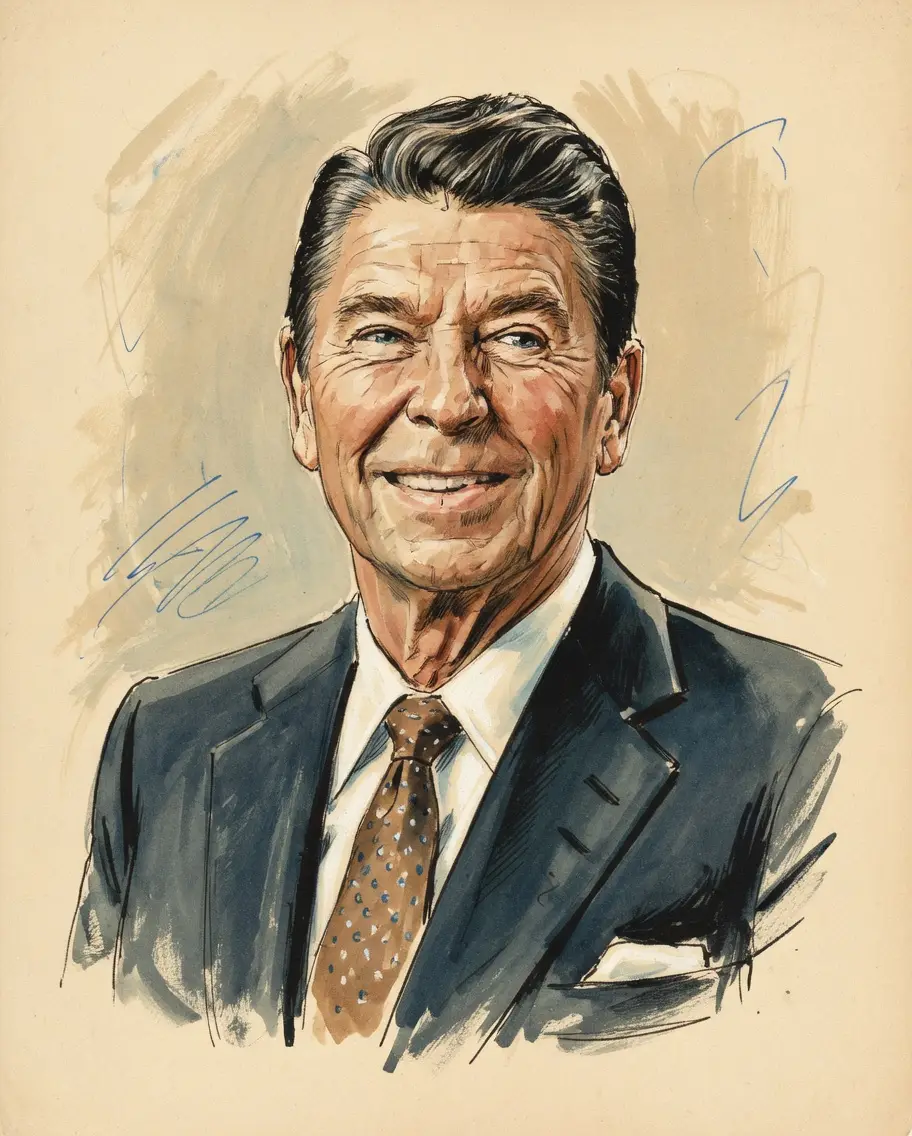
Ronald Reagan on Soviet Union
TL;DR
Ronald Reagan famously labeled the Soviet Union an "evil empire" but later worked toward arms reduction with its leadership.
Key Points
He famously labeled the Soviet Union an "evil empire" in a March 8, 1983, speech to the National Association of Evangelicals.
His administration pursued a major military buildup, including the Strategic Defense Initiative, as a means to compel the Soviets to negotiate arms reductions.
He later retracted the harsh rhetoric, stating in May 1988 that the term "evil empire" belonged to "another era" while meeting with Mikhail Gorbachev in Moscow.
Summary
Ronald Reagan's core position on the Soviet Union during the early years of his presidency was one of militant anticommunism, viewing the conflict as a battle between good and evil, not merely a geopolitical rivalry. This stance was powerfully evidenced by his 1983 speech where he denounced the nation as “an evil empire” and “the focus of evil in the modern world.” His administration pursued a massive military spending program, including the Strategic Defense Initiative, believing that only strength would compel the Soviets toward meaningful negotiations. The relationship was further strained by Soviet actions, such as suppressing Solidarity in Poland and shooting down a Korean airliner in 1983.
However, Reagan's position evolved, particularly after Mikhail Gorbachev came to power in 1985. While never abandoning his principles or support for a strong defense, the president softened his rhetoric and engaged in high-level dialogue, meeting with the General Secretary multiple times. This culminated in significant diplomatic achievements, such as the 1987 Intermediate-Range Nuclear Forces Treaty, the first arms-control pact to mandate actual reductions. By 1988, he acknowledged that the term “evil empire” belonged to “another era,” signaling a shift toward a policy of engagement predicated on verifiable arms reductions.
Frequently Asked Questions
Ronald Reagan's most infamous statement regarding the Soviet Union was labeling it an "evil empire" and "the focus of evil in the modern world" during a speech on March 8, 1983. This reflected his strong ideological opposition to the communist system. He believed the conflict was a moral struggle between good and evil.
Yes, his position evolved significantly during his presidency, especially after Mikhail Gorbachev's rise to power in 1985. While initially combative, Reagan softened his rhetoric and engaged in personal dialogue with the Soviet leader. This shift contributed to landmark agreements like the INF Treaty, leading him to state the 'evil empire' term belonged to a past era.
Initially, the president wanted to challenge the Soviet system through strength and by exposing its ideological flaws. Ultimately, he sought to achieve verifiable reductions in nuclear arsenals, with the stated long-term goal of the total elimination of nuclear weapons. This required building a foundation of mutual trust with Soviet leadership.
Sources6
Evil Empire speech - Wikipedia
Reagan, "Evil Empire," Speech Text - Voices of Democracy
New Year's Radio Address to the People of the Soviet Union
Ronald Reagan - Cold War, Arms Race, Diplomacy | Britannica
Reagan's Evolving Views of Russians and their Relevance Today | Wilson Center
U.S.-Soviet Relations, 1981–1991 - Milestones in the History of U.S. ...
* This is not an exhaustive list of sources.