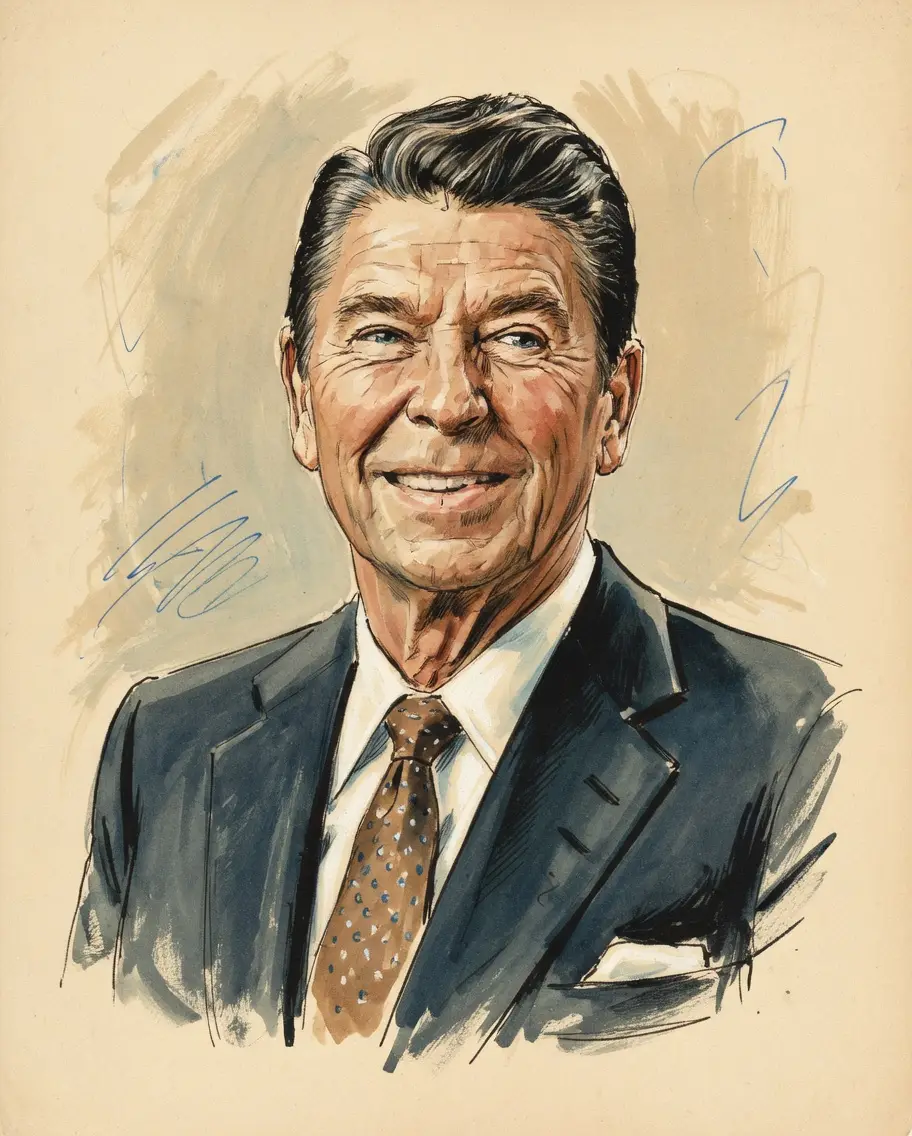
Ronald Reagan on Social Security
TL;DR
Ronald Reagan strongly supported reforming Social Security to ensure its financial integrity while protecting existing benefits for current recipients.
Key Points
He signed the Social Security Amendments of 1983 on April 20, 1983, which addressed the program's solvency through bipartisan compromise.
In 1981, he opposed opportunistic political maneuvering by some in Congress designed to exploit Social Security fears rather than find a solution.
During his 1984 debate, he stated Social Security is totally funded by the Payroll Tax and has nothing to do with the general deficit.
Summary
Ronald Reagan considered restoring the integrity of the Social Security System his highest priority upon taking office in 1981, citing looming trust fund deficits that threatened millions of citizens. He repeatedly stated his unwavering commitment to preserving the basic benefit structure and protecting older Americans, while also stressing the need to hold down the tax burden on workers and eliminate system abuses. The President engaged in a major bipartisan effort, culminating in the creation of the National Commission on Social Security Reform, which he co-sponsored the appointment of its members with Congressional leaders. This process demonstrated his willingness to compromise to achieve a permanent solution, moving away from earlier, more controversial proposals he had floated.
His approach evolved significantly over time; early in his career, he expressed strong criticism, at times calling the system a welfare program subject to congressional change or advocating for voluntary participation features for those who could provide for themselves. However, by the time of the 1983 amendments, he championed the bipartisan compromise as a demonstration that government could work when focused on a fundamental national challenge. The resulting legislation was signed to assure the system's soundness for decades to come, reaffirming the base level of security established under Franklin Roosevelt's original commitment.
Frequently Asked Questions
Ronald Reagan’s primary goal regarding Social Security was to restore the financial integrity of the system to assure its long-term solvency. He maintained this goal while consistently pledging to protect the basic benefits promised to current and future retirees.
Yes, in earlier career statements, Ronald Reagan did explore the idea of voluntary features, suggesting some individuals who could provide for themselves on their own might be excused from compulsory participation. However, he later supported the 1983 amendments that kept the system compulsory while ensuring its financial stability.
The President played a crucial role by establishing the National Commission on Social Security Reform, appointed jointly with Congressional leaders to find a bipartisan solution. He supported the commission's compromise recommendations, which he subsequently signed into law as landmark legislation.
Sources6
Progressive Caucus Encourages Republicans to Listen to Reagan on Social Security
Presidential Statements: President Ronald W. Reagan
Remarks on Signing the Social Security Amendments of 1983
Ronald Reagan Speaks Out Against Socialized Medicine - Wikipedia
Reagan - Social Security
* This is not an exhaustive list of sources.