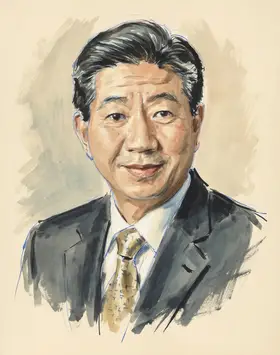
Roh Moo Hyun on Sunshine Policy
TL;DR
Roh Moo Hyun substantially continued the preceding administration's engagement-focused Sunshine Policy, renaming it Peace and Prosperity.
Key Points
He continued the Sunshine Policy, rebranding it as the “Peace and Prosperity Policy” in his 2003 inaugural address.
His government continued supplying humanitarian aid to the North and supported joint projects like the Kaesong Industrial Park, spending over $324 million in aid in 2005.
He made a symbolic gesture by traveling overland across the Military Demarcation Line on foot for the October 2007 inter-Korean summit in Pyongyang.
Summary
Roh Moo Hyun continued the reconciliation and cooperation policy inherited from his predecessor, although he framed his approach as the broader "Peace and Prosperity Policy." This continuation signaled a belief that inter-Korean cooperation was necessary to reduce tension and induce change within the North, despite the ongoing nuclear weapons issue. His administration maintained significant economic support, including furthering projects like the Kaesong Industrial Park and supplying humanitarian aid, viewing peaceful unification as an inevitable long-term goal. He stated that this North Korea policy was absolutely necessary for the nation's existence and prosperity.
His evolved policy aimed to expand the scope beyond simple inter-Korean relations toward establishing a "Northeast Asian economic hub," integrating regional security and economic cooperation. However, the Roh administration faced the challenge of balancing this cooperative approach with the US-led hard-line stance on the North's nuclear program, leading to some policy inconsistencies. Despite these difficulties and a shift in public support, he remained deeply committed to dialogue and economic engagement as the primary tools for stability.
Key Quotes
“For the existence and prosperity of the nation, the sunshine policy is absolutely necessary, and thus must be carried on.”
Frequently Asked Questions
Roh Moo Hyun did not fundamentally change the Sunshine Policy; rather, he continued its core framework of engagement and cooperation. He rebranded it as the "Peace and Prosperity Policy" and sought to broaden its scope to include regional elements in Northeast Asia.
The primary goal for President Roh Moo Hyun was establishing permanent peace on the Korean peninsula and promoting common prosperity in Northeast Asia, building upon the foundation of inter-Korean reconciliation. He viewed success in his North Korea policy as essential, even at the expense of other policy areas.
While both shared the goal of engagement, Roh's policy was viewed as closer to appeasement by some, focusing on buying external peace to create conditions for domestic transformation. His version also explicitly aimed for a wider regional economic hub concept, whereas the original Sunshine Policy was more focused on inter-Korean relations.
Sources8
Sunshine Policy
Sunshine policy | Korean history
Why the Sunshine Policy Made Sense
President Moon Jae-in and Sunshine Policy 3.0
The Roh Moo Hyun Government's Policy toward North ...
The First Year of the Roh Administration's North Korea Policy
Republic of Korea's Sunshine Policy:
The Impeachment of Roh Moo-hyun and the Patterns of South ...
* This is not an exhaustive list of sources.