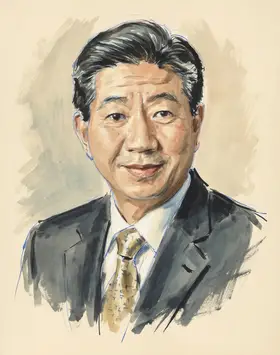
Roh Moo Hyun on Government
TL;DR
Roh Moo Hyun championed a 'Participatory Government' model focused on decentralization, citizen involvement, and anti-corruption efforts.
Key Points
He pursued a "Government for Citizens" policy, known as "G4C," to democratize government via the Internet.
Roh's administration established the Truth and Reconciliation Commission to investigate past wrongdoings, including massacres during the Korean War.
He proposed a plan to relocate the capital away from Seoul as part of his balanced national development campaign.
Summary
Roh Moo Hyun's core vision for government, which he dubbed the "Participatory Government," aimed at fundamentally transforming the political culture of South Korea. He sought to move away from the established, often corrupt, factions and concentrated power structures inherited from previous authoritarian regimes. A key manifestation of this was his use of the Internet to foster e-government, allowing direct interaction between the president and officials at all levels, bypassing traditional bureaucratic hierarchies. He expected government officials to be motivated by ideals rather than personal benefit, a concept that proved unfamiliar to many in the established bureaucracy.
The implications of his government philosophy involved significant structural challenges, including efforts to decentralize authority away from Seoul and a push for measures to uncover historical wrongdoings, like the Truth and Reconciliation Commission. His drive for institutional change often met strong resistance from the political and economic establishment, which contributed to events like his 2004 impeachment attempt. Despite facing setbacks and low approval ratings, Roh's stance represented a commitment to democratic reforms, government accountability to the citizen, and participatory structures in administration.
Key Quotes
“South Korea will not allow U.S. troops in Korea to become involved in any dispute in Northeast Asia without the consent of the South Korean government. Our people will not get entangled in regional disputes against our will in the future. We will go ahead with this as a firm principle.”
Frequently Asked Questions
Roh Moo Hyun's central vision was the "Participatory Government," which emphasized increasing citizen involvement in public decision-making and administration. He sought to establish a more open and horizontal system within the government structure. This vision was meant to eradicate corruption and reform the inherited systems of influence and patronage.
Yes, Roh Moo Hyun faced significant resistance to his reform agenda from the establishment, including the opposition parties and segments of the bureaucracy. His actions, such as publicly supporting his newly formed Uri Party, even led to an impeachment attempt in 2004. Despite this, the impeachment was overturned by the Constitutional Court.
Roh Moo Hyun pioneered e-government as a way to streamline and democratize the government, using the Internet for direct interaction. He spent hours online debating with officials at all levels, which was unprecedented in Korean history. This approach aimed to bring the citizen into politics as the advocate of the common man.
Sources10
The 'Historical Perpetrator' Frame: A Self-Destructive Trap
Roh Moo-Hyun | Biography, Impeachment, & Death | Britannica
The Balancer: Roh Moo-hyun's Vision of Korean Politics and the Future of Northeast Asia
Roh Moo-hyun - Wikipedia
The Impeachment of Roh Moo-hyun and the Patterns of South Korean Politics
Call `await getAirgap()` to load airgap.js
Diplomacy of Defiance and Facilitation: The Six Party Talks and the Roh Moo Hyun Government
The Roh Moo Hyun Government's Policy toward North Korea1
Domestic Issues on Human Rights View|Issues | Ministry of Foreign Affairs, Republic of Korea
I'm sorry. I'm not able to access the website(s) you've provided.
* This is not an exhaustive list of sources.