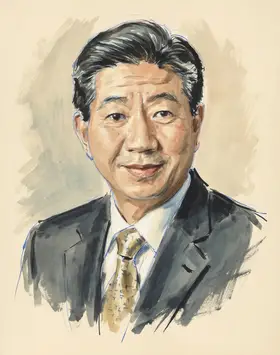
Roh Moo Hyun on China
TL;DR
Roh Moo-hyun pursued a pragmatic, independent foreign policy seeking to balance relations with China and the United States, emphasizing Northeast Asian cooperation.
Key Points
He visited Beijing in July 2003 and met with President Hu Jintao during his first four months in office.
During a 2005 meeting with Hu Jintao, Roh Moo-hyun reaffirmed South Korea’s commitment to the one-China principle and acknowledged China's market economy status.
The Koguryo history controversy in the summer of 2004 caused a significant, though perhaps temporary, reversal in South Korean public opinion, favoring the US over China.
Summary
Roh Moo-hyun's administration viewed China as an increasingly vital partner in Northeast Asia, seeking to develop a 'strategic supplement,' if not an alternative, to the traditional alliance with the United States. A core element of his strategy involved prioritizing engagement with North Korea, an approach that often aligned more closely with Beijing’s interests, as evidenced by his administration's emphasis on dialogue and cooperation over immediate security-related preconditions. During his presidency, he was the first South Korean leader to visit China twice, signaling the importance placed on deepening bilateral ties, which had seen rapid growth since diplomatic normalization in 1992.
However, this proactive effort to enhance relations with China was met with domestic and intellectual skepticism, particularly after the 2004 Koguryo controversy, which temporarily reversed public opinion trends to favor the US over China. While Roh sought greater autonomy and explicitly voiced his disagreements with allies, his administration ultimately recognized China's indispensable role in regional security, particularly regarding North Korea's nuclear issue, where Beijing was seen as the key mediator. His government also acknowledged China's major economic role, becoming its largest investment target, and formally recognized China's market economy status in 2005.
Key Quotes
Roh Moo-hyun expressed concerns how the US government mistreated North Korea.
"It's seldom that only in a 10-year span, relations between thetwo countries can develop so widely, deeply and rapidly,"
Frequently Asked Questions
Roh Moo-hyun pursued a pragmatic policy aimed at developing a strategic partnership with China as a supplement to the US alliance. He focused on regional cooperation within Northeast Asia and maintained an engagement policy toward North Korea, which often saw Beijing as an essential mediator. This approach emphasized independence and self-esteem in diplomacy.
Yes, public opinion experienced a noticeable shift. Prior to the summer of 2004, more Koreans held favorable views toward China than the United States, partly due to the positive trajectory of bilateral economic ties. However, the Koguryo history controversy caused this trend to reverse, leading to a higher favorable rating for the US.
The former President sought to enhance bilateral comprehensive cooperative partnership, deepening cooperation in trade, culture, and security affairs. He also hoped China would play an active and constructive role in resolving the North Korean nuclear issue through the Six-Party Talks.
Sources6
Hu Jintao Holds Talks with Roh Moo-hyun
Hu Jintao Meets with Roh Moo-hyun and Holds In-depth Talks on Issues of Common Concern
South Korea's Strategic Thinking toward China From Park Chung Hee to Roh Moo Hyun
Korean presidents in China mark history, future : Korea.net : The official website of the Republic of Korea
ROK President Roh Moo-hyun Arrives in Beijing
Foreign Ministry Spokesperson Ma Zhaoxu's Remarks on the Death of Former ROK President Roh Moo-hyun
* This is not an exhaustive list of sources.