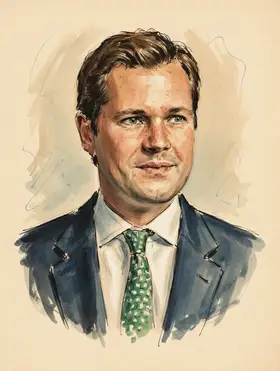
Robert Jenrick on Judges
TL;DR
Robert Jenrick strongly opposes judicial activism, advocating for greater parliamentary and ministerial control over the judiciary and judicial appointments.
Key Points
He proposed abolishing the Judicial Appointments Commission to restore the Lord Chancellor's role in appointing judges.
Jenrick stated that judges blurring the line between adjudication and activism should not be permitted to don the judicial wig.
He announced plans to abolish the two-tier Sentencing Council and have ministers issue new sentencing guidelines instead.
Summary
Robert Jenrick has taken a strong stance against what he terms 'judicial activism,' asserting that judges are blurring the line between adjudication and their proper role. He has alleged that 'dozens of judges' hold 'open borders views' and misuse social media, thereby undermining public trust in the impartiality of the law. His core position involves restoring the ultimate power to Parliament and ministers by reversing restrictions on ministerial involvement in judicial appointments, a system established under the New Labour government.
This proposed shift seeks to dismantle the independence of the Judicial Appointments Commission, with Jenrick stating the Lord Chancellor should once again appoint judges without the involvement of what he calls 'quangos.' He also proposed abolishing the two-tier Sentencing Council and giving ministers responsibility for issuing new sentencing guidelines. Critics argue that his rhetoric is dangerous and risks the politicisation of the judiciary, moving away from the impartial application of law towards a system vulnerable to political influence.
Frequently Asked Questions
Robert Jenrick's position is one of strong opposition to perceived judicial activism within the courts. He advocates for reversing constitutional changes to return greater appointment and sentencing power to Parliament and ministers.
His public focus has strongly intensified on this issue recently, culminating in a declaration of 'war on the judiciary.' He has clearly articulated a desire to curb the current judicial independence structures.
Robert Jenrick claimed that dozens of judges have broadcast political views on social media, particularly regarding open borders, which he suggests compromises their objectivity. He believes these individuals dishonour the judicial role.
Sources5
Not accessible due to paywall/login
Analysis — Robert Jenrick's 'dangerous' rhetoric undermines rule of law and solicitors across the land
Ending Judicial Activism
Lib Dems warn of 'Trumpian purge' as Jenrick targets 35 Judges
Not accessible due to paywall
* This is not an exhaustive list of sources.