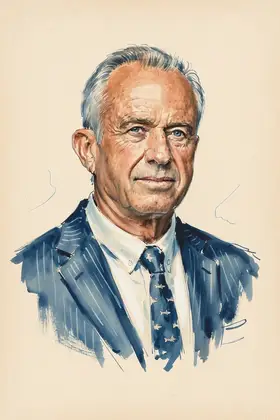
Robert F. Kennedy Jr. on Robert F. Kennedy Sr.
TL;DR
Robert F. Kennedy Jr. deeply admires his father, Robert F. Kennedy Sr., viewing him as a heroic, compassionate figure whose ideals he seeks to pursue.
Key Points
He deeply loved his father and consciously emulated his willingness to fight for what he believed was right.
His father’s campaign in 1968 is framed by some observers as the unfinished political mandate that he is now trying to complete.
He recalls that his father introduced him to the beauty of the outdoors through activities like white-water rafting, shaping his early interests.
Summary
Robert F. Kennedy Jr. consistently frames his political mission and personal aspirations as a continuation of the legacy and ideals of his father, Robert F. Kennedy Sr. He views his father as a courageous figure who was willing to sacrifice for his beliefs and who deeply loved nature, which influenced the younger Kennedy’s own early passions. The shared legacy of public service and fighting against what they perceive as powerful, entrenched corruption is a central theme the son uses to define his own mandate.
His political trajectory is often implicitly or explicitly compared to his father's 1968 presidential run, which he is seen by some as attempting to complete, having been deeply impacted by his father’s assassination at a young age. This childhood trauma and the subsequent need to make sense of such a violent loss appear to fuel his current quest for a heroic role. He feels an obligation to pursue his father's goals, channeling that inherited sense of duty into his current public life.
Frequently Asked Questions
Robert F. Kennedy Jr. holds his father, Robert F. Kennedy Sr., in extremely high regard, often citing him as a primary source of inspiration. He views his father as a compassionate, heroic figure whose public service ideals motivate his own current political efforts.
He frequently positions his candidacy as a continuation or completion of his father's legacy, particularly drawing parallels to the elder Kennedy's 1968 presidential campaign. He feels an obligation to pursue the goals his father set out for the country.
While the loss was described as an inescapable and profound trauma for the younger Robert Kennedy, it seems to have solidified his idealized view of his father. This formative experience is cited as a factor driving his sense of mandate and need to pursue a heroic public role.
Sources2
* This is not an exhaustive list of sources.