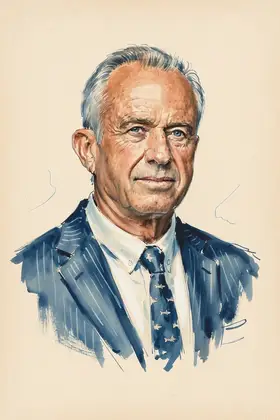
Robert F. Kennedy Jr. on Political Issues
TL;DR
Robert F. Kennedy Jr. champions a platform focused on corporate accountability, environmentalism, public health skepticism, and national reconciliation.
Key Points
He joined a joint statement with a Health and Human Services Secretary and a Senator to reject amendments to the International Health Regulations in 2024.
He has voiced opposition to certain policies regarding the food supply, stating the course needs change without ruining it.
His political outreach included addressing the Libertarian National Convention, indicating an effort to build a broad coalition.
Summary
Robert F. Kennedy Jr.'s political platform centers on a significant critique of established institutions, arguing for a fundamental change in course to address what he views as systemic corruption and corporate overreach. He frequently emphasizes the need to rein in powerful entities, calling for shifts in regulatory oversight, particularly concerning environmental protections and food supply issues, such as responding to backlash by saying the course needs change without ruining the food supply. His positions often blend traditional environmental advocacy with skepticism toward current public health orthodoxies, a stance that has generated considerable attention and debate across the political spectrum.
His appeal often taps into populist sentiment, presenting himself as an outsider capable of bridging partisan divides through a focus on shared national interests and what he sees as a need to correct the course of federal agencies. While often described as having libertarian or non-partisan leanings, his historical advocacy for environmental causes and current focus on corporate influence place his ideology across traditional political lines. He has also engaged with various political groups, including addressing the Libertarian National Convention, to articulate his vision for governmental reform and national renewal.
Frequently Asked Questions
Robert F. Kennedy Jr.'s primary political focus is on reforming institutions he believes are corrupt, particularly regarding corporate power and public health policy. He advocates for a significant course correction away from current federal agency practices. This approach aims to appeal to voters disillusioned with the established political system.
His core themes of environmental advocacy and institutional skepticism have remained consistent throughout his political campaigning. However, his specific alignment and outreach have broadened as he transitions from an activist role to a presidential candidate. His broader engagement with figures across the political spectrum suggests an evolving coalition-building strategy.
Robert F. Kennedy Jr. publicly rejected proposed amendments to the International Health Regulations. He issued a joint statement with other officials expressing disapproval of the changes being considered. This action aligns with his broader skepticism toward international agreements impacting national sovereignty and health policy.
Sources10
RFK Jr. responds to backlash, saying course needs change without ruining food supply; Donald Trump weighs in on herbicide glyphosate
RFK Jr. Addresses Libertarian National Convention
Secretary Kennedy and Senator Rubio Reject IHR Amendments – Joint Statement
How RFK Jr. could shape public health
The ReidOut: RFK Jr. Confederacy praise
Robert F. Kennedy Jr.’s New Book: The American Crisis and the Solution: Reclaiming Our Democracy
Facebook Group Post on RFK Jr. Campaign
More Americans disapprove than approve of the job Robert F. Kennedy Jr. is doing as US Health Secretary
RFK Jr.’s Super Bowl commercial
Robert F. Kennedy Jr.: Political throwback
* This is not an exhaustive list of sources.