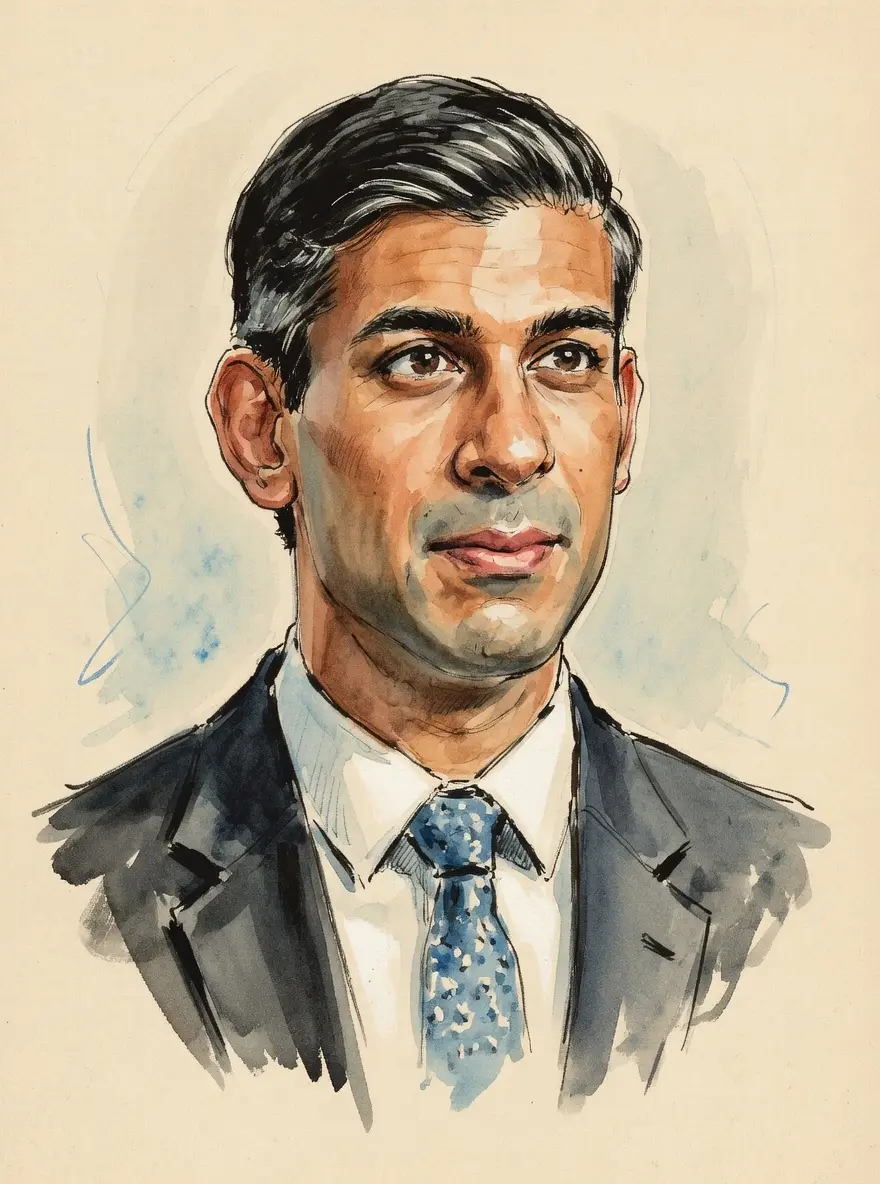
Rishi Sunak on Taxes
TL;DR
Rishi Sunak's tax stance highlights the lower taxation on wealth accumulation versus labour income through capital gains.
Key Points
He published tax affairs showing an effective rate of 23% on £2.23m income/gains in 2022-23 due to lower capital gains tax.
His government is deemed responsible for the largest income tax rise in at least 50 years through a six-year freeze on tax thresholds.
The prime minister's salary (£139,477) represented only 7% of his total income in the financial year 2022-23, with the majority from investments.
Summary
Rishi Sunak's position on taxes is heavily contextualized by the release of his personal tax affairs, which showed an effective rate significantly lower than the top income tax bracket. For the 2022-23 financial year, he paid an effective tax rate of 23% on total earnings and gains of £2.23m, largely because a substantial portion of his income derived from capital gains, which are taxed at a lower rate, often 20%, compared to the top income tax rate of 45%. His government has also been characterized as responsible for a significant income tax rise over a period due to a stealth mechanism involving the freezing of tax thresholds in real terms.
This situation draws attention to the structural discrepancy in the UK tax system, where income from wealth is treated more favourably than income from work, a feature that has existed since rates were previously aligned in 1988. While he has presided over increases in the overall tax burden, particularly through un-uprated thresholds raising substantial revenue, his personal filings underscore the current system's incentive for wealthy individuals whose income is derived from investments to pay a lower overall rate. This has led to calls for reforming capital gains tax to align it more closely with earned income rates to address widening inequality.
Frequently Asked Questions
Rishi Sunak's position is complex, as evidenced by his own tax returns which show a lower effective rate due to his capital gains income. While his government has increased the overall tax burden through freezing thresholds, his personal situation highlights the structural difference between taxes on labour versus wealth.
Rishi Sunak has overseen significant increases in the overall tax burden by freezing tax thresholds, effectively raising income tax revenues via 'stealth tax'. However, the differential treatment of capital gains compared to income tax remains a consistent feature of the system he has operated within as Chancellor and Prime Minister.
The Prime Minister has stated his intention to lower the tax burden in the future, often framing this as contingent on controlling inflation first. His government has emphasized that the overall tax burden remains lower than that of many major European economies despite recent rises.
Sources8
Rishi Sunak paid effective tax rate of 23% on £2.2m income last year
When I first became your Prime Minister...
BBC News - Rishi Sunak: What the UK prime minister’s tax return reveals
What Sunak's tax return tells us about the UK tax system - UK in a changing Europe
Rishi Sunak paid effective tax rate of 23% on £2.2m income last year : r/worldnews
Rishi Sunak’s Taxes: The Real Story
* This is not an exhaustive list of sources.